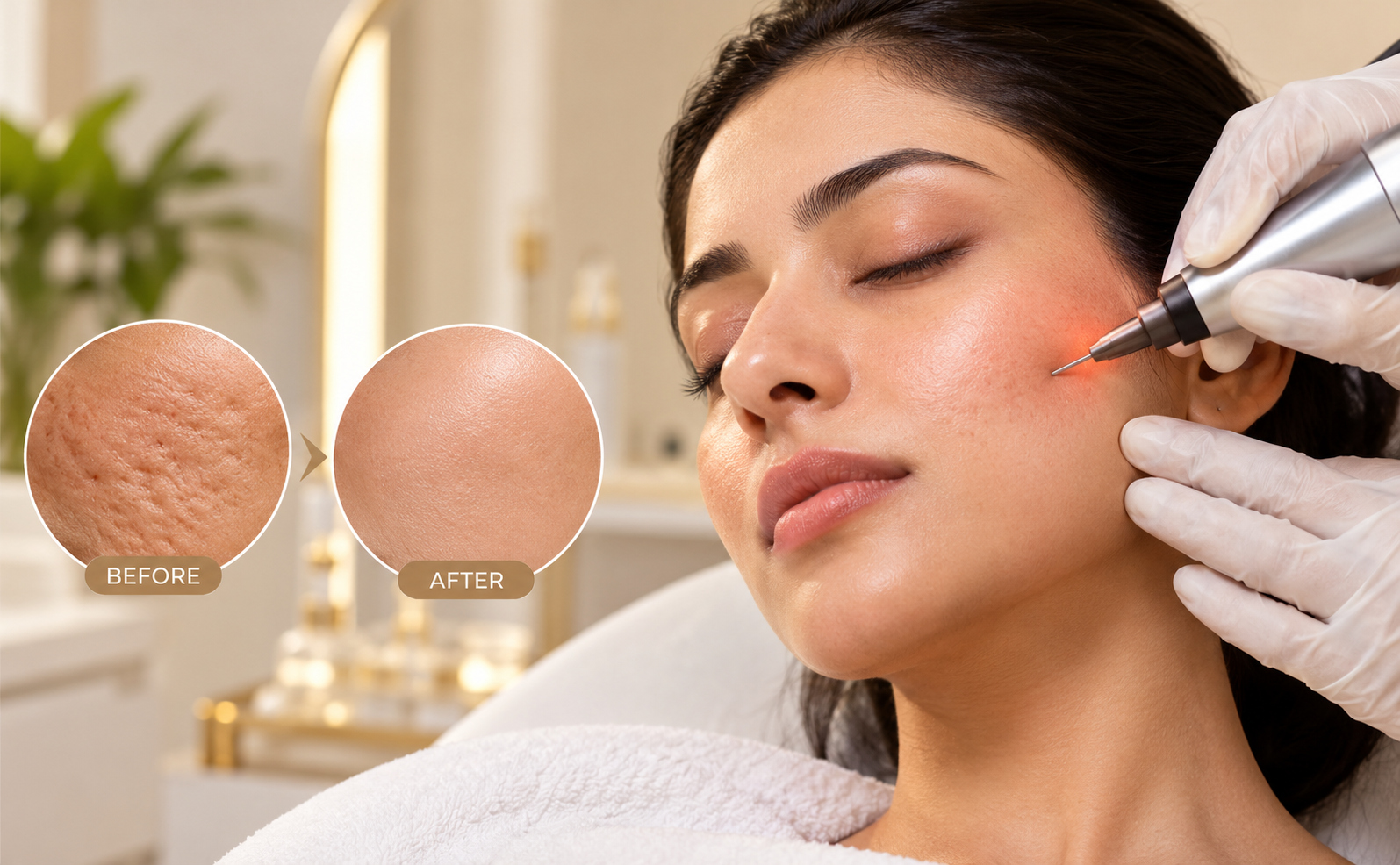
Rolling acne scars, often characterized by their wave-like depressions, can significantly impact skin texture and confidence. Subcision with RF (Radiofrequency) offers a sophisticated, dual-action approach to effectively treat these challenging scars by precisely breaking underlying fibrous bands and stimulating new collagen production, leading to smoother, more even skin. This advanced technique, favoured by leading aesthetic clinics like House of Aesthetics in Delhi, provides a targeted solution for long-term improvement.
Key Takeaways
- Subcision with RF combines mechanical release of scar tissue with radiofrequency energy for enhanced collagen remodeling.
- It is particularly effective for rolling acne scars, which are tethered by fibrous bands beneath the skin’s surface.
- The procedure involves using a specialized needle to break these bands, followed by RF energy delivery to tighten skin and promote healing.
- Downtime is typically minimal, involving some bruising and swelling, but proper aftercare is crucial for optimal results.
- Multiple sessions are usually required, with results becoming progressively more visible over several months.
- Choosing an experienced dermatologist, such as Dr. Neha Khurana at House of Aesthetics, is vital for safety and efficacy.
- The treatment can be combined with other modalities like dermal fillers for comprehensive scar correction.
What is Subcision with RF and How Does it Work for Acne Scars?
Subcision with RF is an advanced dermatological procedure designed to treat depressed acne scars, particularly rolling scars, by releasing the fibrous bands that pull the skin downwards and simultaneously stimulating collagen production using radiofrequency energy. This two-pronged approach addresses both the structural cause of the scar and improves overall skin texture and firmness.
During the procedure, a specialized needle (a Nokor needle or similar) is inserted through a small incision next to the scar. The needle is then moved beneath the skin to mechanically sever the tough, fibrous strands that tether the scar to the underlying tissue, allowing the skin to lift and flatten. Immediately after or during the subcision, controlled radiofrequency energy is delivered through the same cannula or a separate RF device. This RF energy heats the subdermal tissue, causing immediate collagen contraction and stimulating the body’s natural wound-healing response, leading to the gradual production of new collagen and elastin over time. This helps to fill the released depression and improve skin elasticity, making acne scars treatment types India more effective.
Subcision vs. RF Microneedling for Rolling Acne Scars: Which is Better?
While both subcision with RF and RF microneedling are effective for acne scars, subcision with RF is generally superior for rolling acne scars because it directly targets the underlying fibrous bands causing the depression, which RF microneedling alone may not fully address. RF microneedling (MNRF) creates micro-injuries and delivers RF energy to the deeper dermal layers, stimulating collagen and elastin, which is excellent for improving skin texture, pore size, and shallow atrophic scars.
For rolling scars, the primary issue is the deep tethering of the skin. Subcision explicitly releases these tethers, allowing the depressed area to elevate. When combined with RF, it provides an added benefit of collagen remodeling and skin tightening, enhancing the subcision’s structural release. Therefore, if your primary concern is rolling scars, subcision with RF offers a more direct and often more effective solution compared to standalone RF microneedling, though sometimes these treatments can be combined for comprehensive results, as offered at House of Aesthetics Delhi.
How Much Does Subcision with RF Cost?
The cost of subcision with RF varies significantly depending on several factors, including the number of scars being treated, the size of the treatment area, the clinic’s location and reputation, and the experience of the practitioner. In Delhi, the price can range from approximately INR 8,000 to INR 25,000 or more per session.
Factors influencing cost include:
- Severity and Number of Scars: More extensive or deeper scarring requires more time and expertise, affecting the overall cost.
- Clinic Reputation: Premium aesthetic clinics Delhi, like House of Aesthetics, which utilize state-of-the-art technology and employ highly experienced dermatologists such as Dr. Neha Khurana, may have higher prices reflecting their quality of care.
- Combination Treatments: Often, subcision with RF is part of a broader treatment plan that might include laser treatment for acne scars, dermal fillers, or chemical peels, which would increase the total investment. It’s advisable to have a detailed consultation to get a precise quote tailored to your specific needs.
Subcision with RF Side Effects and Recovery Time
Subcision with RF is a generally safe procedure when performed by an experienced dermatologist, but patients should expect some temporary side effects. The most common side effects include bruising, swelling, tenderness, and redness at the treatment sites. These effects typically subside within 3 to 7 days.
Recovery time is relatively quick; most patients can resume their normal activities within 24-48 hours. However, strenuous exercise should be avoided for a few days to minimize swelling and bruising. Small scabs might form at the entry points, which should be kept clean and allowed to heal naturally. Dr. Neha Khurana and her team at House of Aesthetics provide detailed aftercare instructions to ensure a smooth recovery and optimal outcome.
Is Subcision with RF Painful and What Should I Expect?
Subcision with RF is typically well-tolerated, as a topical anesthetic cream is applied to the treatment area beforehand, and local anesthesia is often injected to numb the skin completely during the procedure. Patients usually report feeling pressure or a mild tugging sensation as the needle works to release the fibrous bands, rather than sharp pain.
During your visit to House of Aesthetics, you can expect:
- Consultation: A thorough assessment of your scars and skin type by Dr. Neha Khurana to determine suitability.
- Preparation: Cleansing the skin and application of topical anesthetic.
- Procedure: Injection of local anesthetic, followed by the subcision and RF energy delivery. The procedure usually takes 30-60 minutes depending on the area.
- Post-Procedure: Application of a soothing cream and discussion of aftercare instructions. You might experience immediate mild swelling and bruising.
Choosing a top dermatologist in Delhi ensures a comfortable experience with minimal discomfort.
Subcision with RF Results: How Many Sessions Do I Need?
Significant results from subcision with RF for rolling acne scars can typically be observed after a series of sessions, with gradual improvement becoming evident over several months as new collagen forms. Most patients require between 2 to 4 treatment sessions, spaced 4 to 6 weeks apart, to achieve optimal outcomes.
The exact number of sessions needed depends on the severity and depth of the rolling scars, the individual’s healing response, and the desired level of improvement. Dr. Neha Khurana at House of Aesthetics will create a personalized treatment plan during your initial consultation, outlining the expected number of sessions and the timeline for seeing results. Patience is key, as collagen remodeling is a biological process that takes time.
Can Subcision with RF Work on Deep Rolling Scars?
Yes, subcision with RF is particularly effective for deep rolling scars, as these scars are characterized by strong fibrous tethers that pull the skin surface downwards. The mechanical action of subcision directly addresses these deep bands, releasing the skin and allowing it to elevate, while the added RF energy enhances collagen remodeling to fill the depression from within.
While very deep scars may require more aggressive treatment or a greater number of sessions, subcision with RF is one of the most powerful tools available for improving the appearance of severe rolling scars. It is often a cornerstone of comprehensive acne scar treatment options in Delhi plans at a cosmetic clinic Delhi.
Subcision with RF vs. Dermal Fillers for Acne Scars
Subcision with RF and dermal fillers both address depressed acne scars, but they do so through different mechanisms and can often be complementary. Subcision with RF works by releasing the underlying fibrous bands and stimulating natural collagen production over time, offering a long-term solution to structurally lift the scar. Dermal fillers, on the other hand, provide immediate volume to depressed scars by injecting a biocompatible substance (like hyaluronic acid) directly into the scarred area.
- Subcision with RF: Best for addressing the structural cause of rolling scars, stimulating sustained natural improvement. Results are gradual and long-lasting.
- Dermal Fillers: Ideal for immediate volume correction, especially in areas with significant soft tissue loss. Results are instant but temporary, lasting typically 6-18 months depending on the filler type.
Many dermatologists, including the experts at House of Aesthetics, often combine subcision with RF with immediate filler placement into the newly released space. This combined approach maximizes lift, prevents re-tethering, and offers both immediate and long-term scar improvement.
Who is a Good Candidate for Subcision with RF Treatment?
A good candidate for subcision with RF treatment is typically an individual with noticeable rolling acne scars, regardless of skin type. The procedure is most effective for scars that have a “wave-like” or “undulating” appearance and tend to flatten out when the skin is stretched.
Ideal candidates should:
- Have rolling or tethered depressed acne scars.
- Be in good overall health.
- Have realistic expectations about the outcomes, understanding that multiple sessions are usually required.
- Not have active acne breakouts, infections, or keloidal tendencies in the treatment area.
A comprehensive consultation with a top skin doctor like Dr. Neha Khurana at House of Aesthetics is crucial to determine suitability and tailor a treatment plan that aligns with your specific needs and skin goals.
Subcision with RF Common Mistakes to Avoid
To ensure optimal results and minimize risks with subcision with RF, it’s essential to be aware of common mistakes and how to avoid them. These often revolve around patient selection, technique, and aftercare.
- Not Consulting an Expert: Undergoing treatment with an inexperienced practitioner can lead to inadequate scar release, increased bruising, or potential complications. Always choose a certified dermatologist at a reputable skin clinic in South Delhi.
- Ignoring Aftercare Instructions: Failing to follow post-procedure guidelines, such as avoiding sun exposure or picking at scabs, can compromise healing and results.
- Expecting Instant Perfection: Collagen remodeling is a gradual process. Expecting immediate, dramatic results after one session is unrealistic and can lead to dissatisfaction.
- Treating Active Acne: Subcision should not be performed on areas with active acne or infections, as this can worsen the condition or spread bacteria.
- Lack of Patience: Optimal results unfold over weeks to months as new collagen develops. Rushing additional treatments or becoming discouraged prematurely can be counterproductive.
How Long Do Subcision with RF Results Last?
The results from subcision with RF are generally long-lasting because the procedure addresses the fundamental cause of rolling scars by permanently releasing fibrous tethers and stimulating the body’s natural collagen production. Once new collagen has matured and the scar tissue is remodeled, the improvements are structural and tend to be sustained.
While individual results can vary based on skin type, scar severity, and lifestyle, the improvements achieved through subcision with RF are considered semi-permanent to permanent. Maintaining good skincare, protecting skin from sun damage, and attending follow-up sessions as recommended by your dermatologist can help prolong and optimize the results.
Subcision with RF Aftercare Tips and What to Avoid
Proper aftercare is paramount for maximizing the benefits of subcision with RF and ensuring a smooth recovery. Following these guidelines, provided by experts like Dr. Neha Khurana at House of Aesthetics, will help achieve the best possible outcomes.
Aftercare Tips:
- Gentle Cleansing: Cleanse the treated area gently with a mild, pH-balanced cleanser twice a day.
- Moisturize: Apply a soothing, non-comedogenic moisturizer to keep the skin hydrated and support healing.
- Sun Protection: Rigorously apply a broad-spectrum sunscreen (SPF 30 or higher) daily, even indoors, to protect the healing skin from hyperpigmentation.
- Cold Compresses: Use cold compresses (ice packs wrapped in cloth) intermittently for the first 24-48 hours to reduce swelling and bruising.
- Elevate Head: Sleep with your head slightly elevated for the first night or two to help minimize swelling.
What to Avoid:
- Picking or Touching: Resist the urge to pick at any scabs or touch the treated area excessively, as this can lead to infection or new scarring.
- Strenuous Exercise: Avoid intense physical activity, heavy lifting, and activities that cause excessive sweating for at least 48-72 hours.
- Direct Sun Exposure: Stay out of direct sunlight as much as possible for at least two weeks.
- Harsh Skincare Products: Avoid retinoids, alpha hydroxy acids (AHAs), beta hydroxy acids (BHAs), and abrasive scrubs for at least one week, or as advised by your dermatologist.
- Makeup: Refrain from applying makeup to the treated area for at least 24 hours, or until the entry points have closed.
Does Subcision with RF Work for Atrophic vs. Boxcar Scars?
Subcision with RF is primarily indicated and most effective for rolling acne scars due to its mechanism of releasing underlying fibrous bands. While it can offer some improvement, it is generally less effective as a standalone treatment for atrophic scars and boxcar scars.
- Atrophic Scars (Icepick, Boxcar, Rolling): Atrophic scars are characterized by depressions in the skin. Rolling scars, with their undulating appearance, are the prime target for subcision.
- Boxcar Scars: These are wider, box-like depressions with sharp, defined edges. While subcision can release any underlying tethering, their sharply defined borders often require additional treatments like microneedling for acne scars, laser resurfacing, or punch excision for optimal flattening.
- Icepick Scars: These are narrow, deep, “V”-shaped scars that extend into the dermis. Subcision is generally not effective for icepick scars, which are better treated with punch excision, TCA CROSS, or specialized lasers.
A thorough consultation at a leading aesthetic clinic Delhi is crucial to determine the most appropriate treatment strategy for your specific scar types.
Subcision with RF Before and After: Real Results
Patients considering subcision with RF often seek “before and after” examples to understand the potential improvements. While individual results vary, real results from subcision with RF typically show a noticeable reduction in the depth and prominence of rolling acne scars. The treated skin appears smoother, with less pronounced depressions and an improved texture.
Over several months post-treatment, as new collagen remodels the skin, the affected areas gradually fill in, leading to a more even and youthful complexion. Many patients report increased confidence in their skin’s appearance. House of Aesthetics, a premier cosmetic clinic Delhi, maintains a portfolio of client transformations that can be reviewed during your consultation, providing a realistic expectation of the outcomes possible with expertly administered Subcision with RF by Dr. Neha Khurana.
Conclusion
Subcision with RF presents a powerful and highly effective solution for individuals struggling with rolling acne scars, offering a dual approach that physically releases depressed skin and stimulates long-term collagen regeneration. This advanced treatment, when performed by an experienced and trusted dermatologist like Dr. Neha Khurana at House of Aesthetics, provides not just cosmetic improvement but also a significant boost in self-confidence. If you are seeking to address persistent acne scars and achieve smoother, more radiant skin, we invite you to schedule a personalized consultation at our premium aesthetic clinic in Delhi. Our commitment to medically guided procedures, safety, and results-driven care ensures you receive the best possible treatment for your unique skin concerns. Embark on your journey to clearer skin with the leading experts in advanced skin treatments.