Skin tags and warts are among the most common reasons people visit a dermatologist, and among the most common reasons people attempt risky home fixes. Tying a tag with thread, cutting it or applying acid can cause infection and scars. This guide explains how skin tags and warts differ, how the main removal methods compare, and what to expect, based on the dermatology approach at House of Aesthetics in Greater Kailash.
Skin Tags and Warts: Two Different Problems
Skin Tags
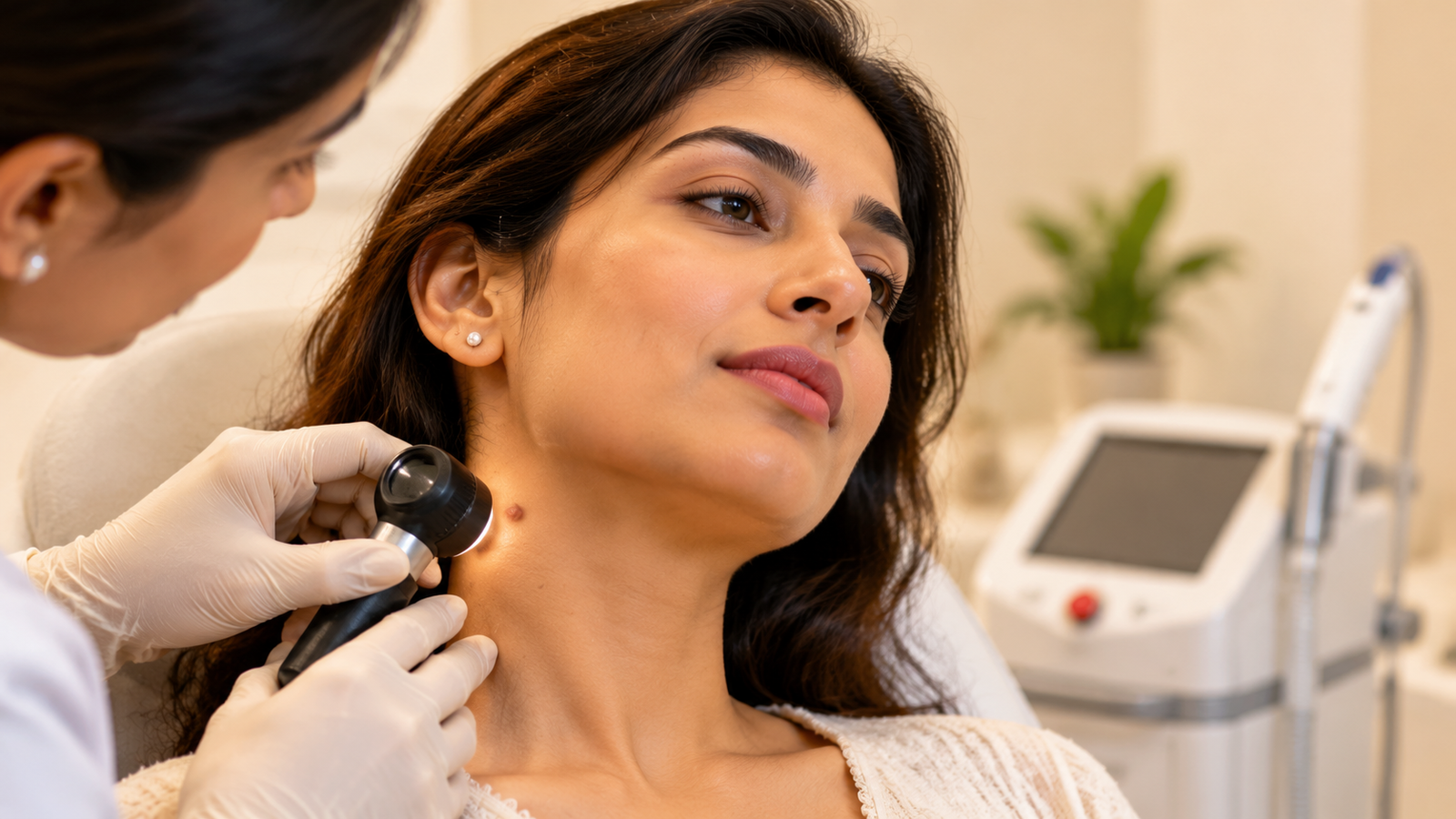
Skin tags are small, soft, skin-coloured growths that hang from a stalk, typically on the neck, underarms, eyelids and groin. They are harmless and not contagious. They are more common with friction, weight gain and conditions linked to insulin resistance. The skin tag treatment page explains how they are removed.
Warts
Warts are caused by a virus, the human papillomavirus, and are contagious through contact. They appear as rough raised bumps on hands and feet, around nails and elsewhere. Warts can recur because the virus may remain in surrounding skin. See the skin warts treatment page for options.
Similar Growths That Are Not Tags or Warts
Corns, moles and other growths can look alike. Corns are pressure thickening of skin, covered in corns treatment and in our comparison, corns and warts: home remedies versus clinical removal. Moles are a separate matter, discussed below and on the skin mole treatment page.
The Main Removal Methods Compared
Electrocautery
Electrocautery uses a fine, heated tip or electric current to remove or destroy the growth, sealing small vessels as it works. It is quick, precise for small lesions and commonly used for skin tags and many warts. After treatment the area forms a tiny scab that falls off in days to a couple of weeks.
Laser Removal
Laser energy vaporises the tissue layer by layer. It offers good control and is useful on delicate or cosmetically sensitive areas, such as the face, eyelids and neck. Depending on the laser and area, healing may be similar to cautery. Laser technology used for broader skin rejuvenation is covered on the laser resurfacing page.
Freezing (Cryotherapy)
Liquid nitrogen freezes the growth so it blisters and falls off. It is commonly used for warts, often needing repeat sessions, and may lighten or darken the skin in some people.
Surgical Removal and Other Methods
Larger or deeper lesions, and any growth that needs lab testing, may be removed by minor surgery.
Quick Comparison
| Method | Best For | Points to Know |
|---|---|---|
| Electrocautery | Skin tags, many small warts | Quick, small scab, heat can leave a mark in darker skin if not done carefully |
| Laser | Delicate areas, small precise lesions | High control, suited to the face and neck |
| Freezing | Common warts | Often needs repeat sessions |
| Minor surgery | Larger or uncertain lesions | Allows testing of removed tissue |
So Which Is Right for You?
There is no single winner. The best method depends on the type of growth, its size and location, your skin tone and your tendency to scar. A dermatologist chooses after examining the area, which is also the safest way to make sure the growth is what you think it is. Whichever method is used, ask about expected healing time, how many sessions you may need and what the chance of recurrence is for warts.
Healing, Marks and Scarring
Most small skin tag removals heal within a week or two. Temporary darkening or lightening of the area is common in Indian skin, so after-care matters: keep the area clean, avoid picking the scab and use sun protection. Persistent marks can be addressed with dark spots treatment or laser toning. People who scar thickly should flag it before any procedure, and our guide on Keloid and Hypertrophic Scar Treatment in Delhi explains why. For what healing looks like after mole removal, see is mole removal permanent: recovery and scar expectations.
Why Home Removal Is Risky
- Tying, cutting or burning with chemicals can cause bleeding, infection and scarring.
- Wart treatments with acid can damage healthy skin and spread the virus.
- Removing a growth yourself means it cannot be examined, which matters if it is not what it seems.
When a Growth Needs to Be Checked First
Do not remove a growth at home if it is changing in size, shape or colour, bleeds without injury, has uneven edges or several colours, or looks different from your other moles. These need medical examination, and some need lab testing after removal. Regular skin checks are discussed in Mole Mapping and Skin Checks: Why Annual Screening Matters .
Why Skin Tags Keep Coming Back
Tags tend to recur in the same friction areas and may be linked to weight and metabolic health. Addressing the underlying factors can reduce new ones. See medical weight loss in Delhi and the clinic’s nutrition and diet counselling. Also read Mounjaro and Medical Weight Loss: Separating Fact From Instagram Claims for a cautious view of medicines in this area.
Skin Tag and Wart Care in South Delhi
At House of Aesthetics, Dr. Neha Khuraana, known to many patients as the best dermatologist in South Delhi for minor procedures with careful after-care, examines each growth before recommending removal. The clinic is convenient for Greater Kailash I and II, Panchsheel Park, Alaknanda and Lajpat Nagar. Learn more in Best Dermatologist in Greater Kailash: Dr. Neha Khuraana’s Credentials and Approach, and see what to expect at a first visit.