Laser hair reduction is one of the most frequently performed aesthetic procedures in Delhi — and consistently one of the most misunderstood. Questions about safety on Indian skin, how many sessions are needed, what happens between sessions, and why it is called “reduction” rather than “removal” are among the most common we address in first consultations.
If you are considering laser hair reduction and want honest, clinically accurate answers before you commit, this is the guide for you.
Laser Hair Reduction vs Laser Hair Removal: What’s the Difference?
This terminology question matters. In India and internationally, “laser hair removal” is a colloquially used term — but “laser hair reduction” is the technically correct description, and it reflects how the treatment actually works.
Laser treatments target and destroy active hair follicles. However, at any given time, only a proportion of follicles are in the active growth phase (anagen) — the phase when they are susceptible to laser energy. Follicles in the resting or transitional phases are not effectively targeted.
This is why multiple sessions are required. Each session targets the currently active follicles. Over a course of sessions, the vast majority of follicles are treated, producing a significant and long-lasting reduction in hair density and thickness.
The word “removal” implies 100% permanent elimination of every hair — which is not what any laser technology can guarantee. “Reduction” is honest: most patients achieve 70–90%+ reduction in hair after a full course, with fine, light regrowth (if any) that is far less dense than before treatment.
How Does Laser Hair Reduction Work?
The principle is called selective photothermolysis. The laser emits light at a specific wavelength that is absorbed preferentially by melanin — the pigment in the hair follicle. This light energy is converted to heat within the follicle, destroying the cells responsible for hair growth without significantly damaging the surrounding skin.
The key variables in this process are:
- Wavelength — must match the absorption spectrum of melanin in the follicle
- Pulse duration — long enough to heat the follicle fully, short enough not to overheat surrounding tissue
- Fluence (energy) — calibrated to the depth of the follicle and the patient’s skin tone
- Skin cooling — protects the surface skin while the deeper follicle is heated
Getting these parameters right for Indian skin tones is where expertise matters most.
The Laser Technology Used at House of Aesthetics
Not all laser technologies are equal for Indian skin. This point deserves significant attention.
Diode laser (800–810 nm) is widely regarded as the gold standard for laser hair reduction on Indian skin types (Fitzpatrick III–V). It has a wavelength that penetrates deeply to the follicle while being safe for darker skin tones with appropriate parameter adjustment. At House of Aesthetics, our laser hair reduction is performed with a system that includes built-in contact cooling to protect the skin surface.
Alexandrite laser (755 nm) is highly effective but is better suited to lighter skin tones. For Indian skin, it carries a higher risk of burns and PIH and requires more conservative settings.
Nd:YAG 1064 nm laser penetrates the deepest and is the safest option for the darkest skin tones (Fitzpatrick V–VI). It is less effective at lower energy levels, however, requiring experienced hands to balance efficacy and safety.
IPL (Intense Pulsed Light) is not a laser — it is a broadband light source. It is less selective, less effective and associated with a higher rate of burns on darker Indian skin. Clinics offering “laser” hair reduction with IPL devices are not providing the same treatment.
At your consultation at House of Aesthetics, your skin tone, hair colour and area to be treated are all assessed to ensure the correct technology and parameters are used.
Is Laser Hair Reduction Safe for Indian Skin?
Yes — when performed with the appropriate technology and correct parameters by a trained clinician. Indian skin has a higher melanin content than Caucasian skin, which means the laser energy must be carefully calibrated: sufficient to destroy the follicle, but not so high that it burns or causes PIH in the skin around it.
This calibration is a skill. Complications (burns, blistering, hyperpigmentation) associated with laser hair reduction in India are almost always the result of inappropriate technology (usually IPL), incorrect settings, or the treatment being performed without proper skin tone assessment.
At a dermatologist-led clinic like House of Aesthetics, your skin is assessed at every session and parameters are adjusted if the skin has tanned, if there is any active inflammation, or if the season has changed (summer sessions require adjustment for tanned skin).
How Many Sessions Will You Need?
The number of sessions required varies based on:
- The area being treated
- Hair density and thickness in that area
- Your hormonal status (hormonal conditions like PCOS can slow response)
- Your compliance with the pre-treatment preparation
As a general guide:
| Area | Approximate Sessions Needed |
|---|---|
| Upper lip | 6–8 |
| Chin | 6–8 |
| Underarms | 6–8 |
| Bikini line | 6–8 |
| Full legs | 8–10 |
| Full arms | 6–8 |
| Back (male) | 8–12 |
| Chest (male) | 8–10 |
Sessions are spaced based on the hair growth cycle of the area — typically 4–6 weeks for facial areas and 6–8 weeks for body areas. This interval is important: arriving too soon or too late between sessions affects efficacy.
What to Do (and Not Do) Before Each Session
Do:
- Shave the area 24–48 hours before your session. The hair shaft should be at or below the skin surface for the laser to target the follicle, not the hair above the skin
- Stay out of the sun and use SPF 50+ for at least 2 weeks before treatment — tanned skin increases risk
- Inform your clinician of any new medications (some medications increase photosensitivity)
- Remove all lotions, creams and deodorants from the treatment area before arriving
Do not:
- Wax, thread, pluck or use hair removal cream for at least 4 weeks before a session. These methods remove the follicle or root — the laser needs it to be intact
- Use self-tanners or sunbeds for 4 weeks before treatment
- Attend a session if you are sunburned or have active skin inflammation in the treatment area
What Happens During the Session?
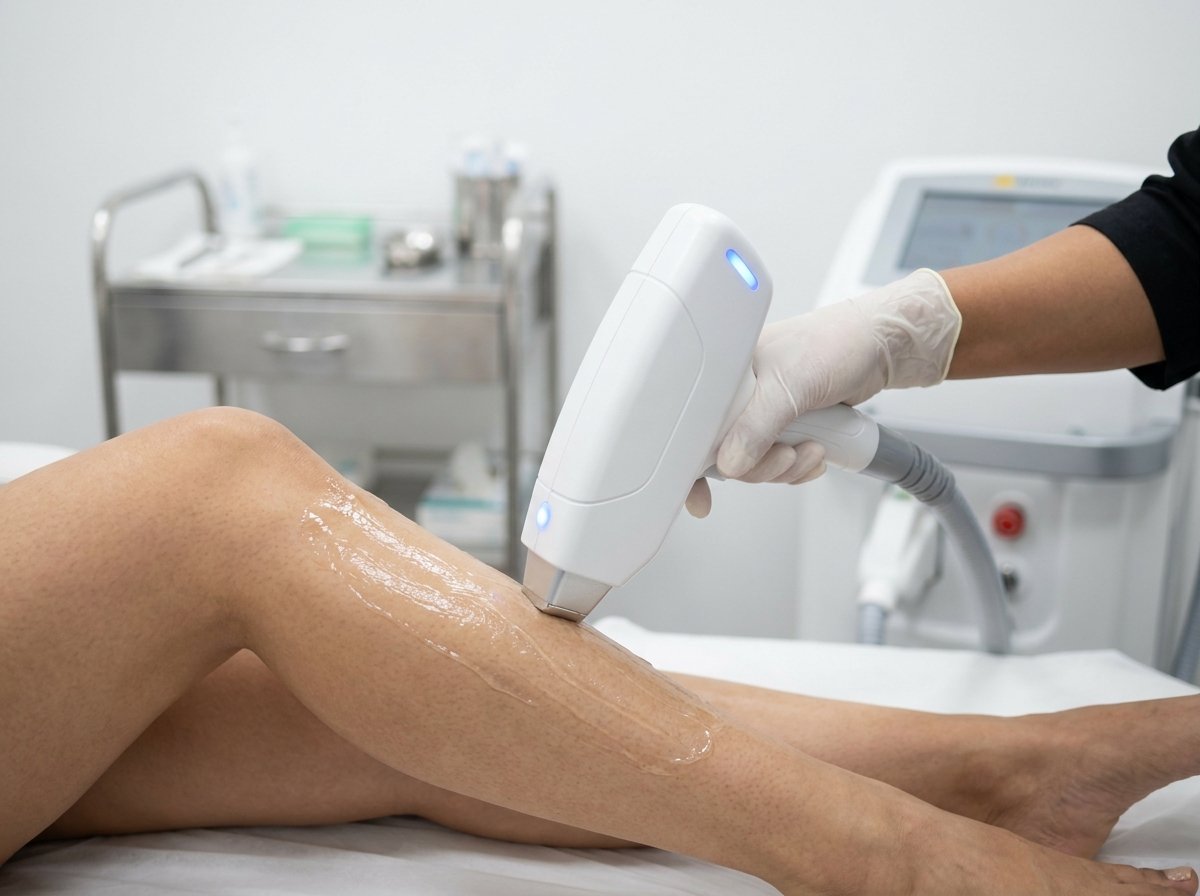
- The treatment area is shaved (if not already done) and cleaned
- A cold gel or built-in cooling device protects the skin surface
- Your clinician selects the appropriate parameters for your skin tone and the area being treated
- The laser handpiece is moved across the treatment area in overlapping passes
- You may feel a mild snapping or warming sensation — this varies by area and individual tolerance. Sensitive areas such as the upper lip or bikini line are more noticeable
Session times vary from 10–15 minutes for small areas (upper lip, underarms) to 45–60 minutes for full legs or back.
What to Expect After the Session
Immediately after:
- Mild redness and a sensation similar to a mild sunburn are normal for 1–4 hours
- Some follicular swelling (small bumps around treated follicles) can appear for 24 hours — this is a sign the follicles have responded to treatment, not a problem
- Cool compresses or aloe vera gel help soothe the area if needed
In the following 2–3 weeks:
- Treated hairs appear to continue growing initially — they are actually being shed, not regrowing. Gentle exfoliation and patience are all that is needed
- Avoid sun exposure and use SPF 50+ on treated areas
What Results Should You Expect?
After a full course of sessions:
- 70–90% reduction in hair density in most patients
- Any remaining hair is typically finer, lighter and slower-growing
- Most patients find that shaving or waxing once every few months — or not at all — replaces their previous routine
For patients with hormonal hair growth (PCOS, certain medications), results may require more sessions or an annual top-up session to maintain. This is discussed at your consultation.
Side Effects and What to Watch For
In experienced hands with appropriate technology, significant side effects are uncommon. Minor, temporary effects are normal:
Normal: Redness, mild warmth, follicular swelling for 1–24 hours
Rare with correct parameters: Burns, blistering, PIH (hyperpigmentation), hypopigmentation
The risk of complications is significantly reduced by:
- Correct technology choice for your skin tone
- Proper pre-session skin assessment
- Following pre-and post-session instructions
- Treatment at a dermatologist-supervised clinic
If you notice blistering, significant burning or lasting skin colour change after a session, contact your clinic immediately.
How Much Does Laser Hair Reduction Cost in Delhi?
Cost varies significantly by area, clinic quality and technology used. In a quality clinical setting in South Delhi:
- Upper lip: ₹1,500–₹3,000 per session
- Underarms: ₹2,000–₹4,000 per session
- Full legs: ₹8,000–₹18,000 per session
- Full arms: ₹5,000–₹10,000 per session
Most clinics offer package pricing for a full course of 6–8 sessions, which provides significantly better value than per-session pricing.
Be cautious of very low-cost laser hair reduction offers — these often involve IPL devices, unqualified operators, or inadequate session protocols that produce poor results and higher complication risk.
Start Your Laser Hair Reduction Journey
If you are ready to reduce the time, effort and ongoing cost of traditional hair removal — and want to do it safely and effectively — book a consultation at House of Aesthetics. We are located in Greater Kailash, South Delhi.
At your consultation, your skin tone and hair type will be assessed, the right technology confirmed, and a session plan built around your specific areas and schedule.
This article has been reviewed and approved by the dermatologist at House of Aesthetics, Greater Kailash, Delhi. It is intended for informational purposes and does not replace a clinical consultation.