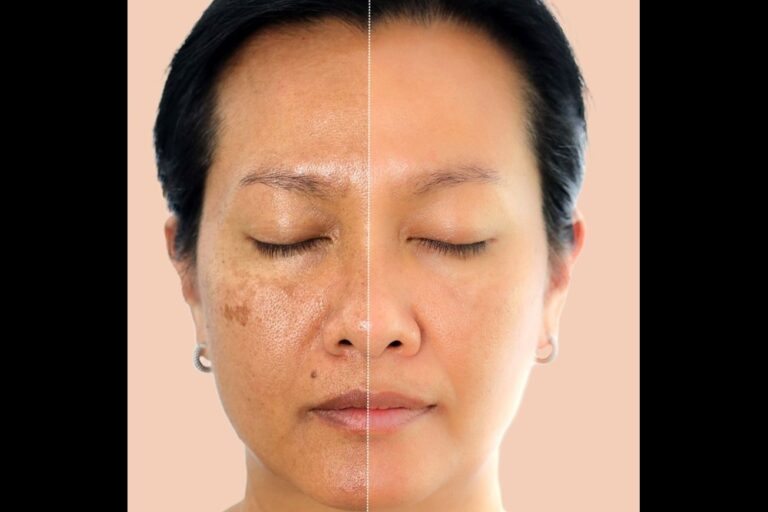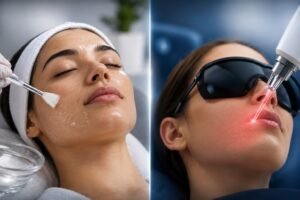

Neck bands, often a subtle yet noticeable sign of aging, are horizontal lines or vertical cords that appear on the neck due to a combination of genetic factors, muscle activity, and skin laxity. While traditionally addressed with surgical interventions, a range of effective non-surgical options exist in 2026 to significantly reduce their appearance, offering a refined, youthful neck contour without the downtime associated with surgery.
Key Takeaways
- Neck bands are caused by a combination of genetics, platysma muscle activity, and collagen loss.
- They differ from general neck wrinkles, specifically involving the platysma muscle.
- Non-surgical treatments like Botox, dermal fillers, and energy-based devices offer effective solutions.
- Results from non-surgical treatments are temporary and require maintenance.
- House of Aesthetics in Delhi provides personalized, expert-led non-surgical options for neck band treatment.
- Lifestyle factors and sun protection can help prevent the early formation of neck bands.
What Causes Neck Bands to Form as You Age?
Neck bands primarily form as we age due to a combination of platysma muscle activity, skin laxity, and collagen degradation. The platysma is a broad, thin sheet of muscle in the neck that, with repetitive motion and age, can become more prominent, creating visible vertical cords, while a loss of elasticity in the skin contributes to horizontal lines.
As individuals age, several factors converge to contribute to the appearance of neck bands:
- Platysma Muscle Activity: The platysma muscle runs from the chest up to the jawline. Over time, repetitive contractions of this muscle, often during facial expressions or speaking, can cause it to thicken and stand out, leading to the formation of vertical “platysmal bands.”
- Collagen and Elastin Loss: The skin’s structural proteins, collagen and elastin, diminish with age. This loss leads to reduced skin elasticity and firmness, making the skin more susceptible to creasing and sagging, which accentuates both horizontal and vertical neck bands.
- Genetics: Individual genetic predispositions play a significant role in how and when neck bands appear. Some individuals may develop them earlier or more prominently than others, regardless of lifestyle.
- Sun Exposure: UV radiation accelerates collagen breakdown and impairs skin elasticity, exacerbating the formation of wrinkles and bands on the neck.
- Gravity: Constant gravitational pull contributes to the downward descent of facial and neck tissues, further emphasizing existing lines and creating new ones.
Are Neck Bands the Same as Turkey Neck?
While both neck bands and “turkey neck” refer to aging concerns in the neck area, they are distinct conditions. Neck bands typically refer to specific horizontal lines or prominent vertical platysmal cords, whereas “turkey neck” describes a broader condition of loose, sagging skin and excess fat that resembles a wattle, often encompassing a more generalized skin laxity and submental fullness.
Understanding the difference is crucial for effective treatment planning:
- Neck Bands: These are primarily related to the platysma muscle or localized skin creases. Vertical bands are direct manifestations of the platysma muscle contracting and becoming more visible. Horizontal lines are often due to repetitive movement and skin creasing.
- Turkey Neck: This term denotes a significant amount of excess skin and sometimes fat under the chin and along the jawline that has lost its firmness and hangs loosely. It’s a more advanced stage of neck aging, often requiring more extensive interventions, though non-surgical options can still offer improvement.
An accurate diagnosis by a leading aesthetic specialist like Dr. Neha Khurana at House of Aesthetics is essential to determine the most suitable approach.
How Much Do Neck Band Treatments Cost?
The cost of neck band treatments in Delhi varies significantly based on the chosen non-surgical method, the number of sessions required, the extent of the condition, and the expertise of the clinic. For instance, treatments like Botox or dermal fillers are priced per unit or syringe, respectively, while energy-based treatments are typically priced per session or package.
At House of Aesthetics, pricing is transparent and discussed during a personalized consultation, ensuring you understand the investment for your specific treatment plan. It’s important to consider that non-surgical treatments often require maintenance sessions, which will factor into the overall long-term cost. Patients seeking precise pricing for neck bands treatment in Delhi should schedule an in-depth consultation.
Best Non-Surgical Treatments for Neck Bands
The best non-surgical treatments for neck bands in 2026 are tailored to the specific type of band (horizontal or vertical) and the individual’s skin concerns, often involving a combination of injectables and advanced energy-based devices. These methods focus on relaxing muscles, stimulating collagen production, and tightening the skin.
At House of Aesthetics, under the expert guidance of Dr. Neha Khurana, leading dermatologist in Delhi, several effective options are available:
- Botox (Botulinum Toxin): For vertical platysmal bands, Botox is highly effective. It works by relaxing the platysma muscle, reducing its prominence and making the neck appear smoother. Results typically last 3-4 months. This is a popular Botox treatment Delhi option for neck rejuvenation.
- Procedure: Tiny injections are administered directly into the platysma bands.
- Downtime: Minimal, usually minor redness or swelling that subsides quickly.
- Benefits: Smooths vertical bands, creates a more defined jawline (Nefertiti lift), and provides a subtle lift.
- Dermal Fillers: While less common for prominent vertical bands, certain dermal fillers Delhi can be used to subtly fill horizontal neck lines or improve skin quality.
- Procedure: Hyaluronic acid fillers are strategically injected into etched lines.
- Downtime: Mild bruising or swelling.
- Benefits: Plumps horizontal lines, hydrates skin, and improves texture.
- Ultherapy (Focused Ultrasound): This non-invasive treatment uses focused ultrasound energy to stimulate collagen production deep within the skin layers, leading to gradual tightening and lifting.
- Procedure: Ultrasound energy is delivered to precise depths, initiating a natural regenerative response.
- Downtime: None, though some mild redness or swelling may occur.
- Benefits: Firms sagging skin, improves overall neck contour, and tightens mild to moderate laxity.
- Radiofrequency (RF) Treatments: Devices like Exilis or other advanced RF technologies deliver controlled heat to the deeper layers of the skin, stimulating collagen remodeling and tightening.
- Procedure: A handheld device delivers RF energy to the skin’s surface, heating underlying tissues.
- Downtime: Minimal to none, possibly some temporary redness.
- Benefits: Reduces skin laxity, improves skin texture, and can soften the appearance of horizontal lines.
- Thread Lifts: While still minimally invasive, thread lifts involve inserting dissolvable sutures to physically lift and reposition sagging skin and stimulate collagen.
- Procedure: Threads with cones or barbs are inserted under the skin and then pulled to create a lifting effect.
- Downtime: A few days of swelling or bruising.
- Benefits: Provides immediate lifting, with gradual collagen stimulation for longer-term effects.
For comprehensive anti-aging treatments India, House of Aesthetics offers a range of non-surgical cosmetic treatments that can be combined for optimal results.
Can You Get Rid of Neck Bands Without Surgery?
Yes, it is entirely possible to significantly reduce the appearance of neck bands without surgery using a variety of advanced aesthetic treatments available in 2026. Non-surgical options, performed by experienced professionals like Dr. Neha Khurana, offer effective results with minimal downtime, making them a popular choice for those seeking rejuvenation.
While non-surgical treatments cannot replicate the dramatic results of a surgical neck lift, they can effectively soften lines, tighten skin, and improve overall neck contour. Key methods include:
- Botox: For vertical platysmal bands, Botox injections relax the muscle, smoothing the neck.
- Dermal Fillers: Can subtly fill horizontal lines and improve skin quality.
- Energy-Based Devices (Ultherapy, Radiofrequency): These technologies stimulate collagen and elastin production, leading to gradual skin tightening and firming over time.
The key to success lies in a personalized treatment plan developed by a qualified practitioner at a reputable aesthetic clinic Delhi.
Neck Bands Botox vs. Other Treatments: Which Works Better?
For vertical platysmal neck bands, Botox is often considered the gold standard and typically works better than other non-surgical treatments specifically for muscle-related bands. However, for horizontal lines, overall skin laxity, or a combination of concerns, other treatments like dermal fillers or energy-based devices may be more effective or used in conjunction with Botox for comprehensive results.
- Botox:
- Pros: Directly addresses muscle contraction, leading to a noticeable softening of vertical bands and a smoother neck profile. Quick procedure with minimal downtime.
- Cons: Temporary results (3-4 months), does not address skin laxity or horizontal lines.
- Best for: Prominent vertical platysmal bands.
- Dermal Fillers:
- Pros: Fills in horizontal lines, improves skin hydration and texture. Can offer immediate results.
- Cons: Not suitable for muscle-related vertical bands, temporary results.
- Best for: Horizontal ‘necklace’ lines and overall skin quality improvement.
- Energy-Based Devices (Ultherapy, Radiofrequency):
- Pros: Addresses overall skin laxity, stimulates long-term collagen production, and offers gradual, natural-looking improvement in firmness.
- Cons: Results are gradual and may require multiple sessions, not ideal for strong platysmal bands alone.
- Best for: Mild to moderate skin laxity, overall neck tightening, and softening of lines over time.
The choice of treatment or combination approach is best determined through a detailed consultation with a top dermatologist in Delhi who can assess your specific concerns and goals.
Do Neck Exercises Help Reduce Neck Bands?
While neck exercises can help strengthen the neck muscles and improve posture, they generally do not effectively reduce or eliminate established neck bands, especially those caused by the platysma muscle or significant skin laxity. These exercises may offer minor preventative benefits by promoting muscle tone, but they cannot reverse the effects of collagen loss or chronic muscle contractions leading to visible bands.
- Limited Impact: Exercises primarily target muscle strength and flexibility, not the relaxation of specific hyperactive muscles like the platysma that cause vertical bands, nor do they rebuild lost collagen or elastin.
- Potential Exacerbation: Some exercises that involve exaggerated neck movements or muscle tensing could potentially worsen the appearance of platysmal bands by overworking the muscle.
- Better for Prevention: Maintaining good posture and general neck health through exercise can support a youthful appearance, but professional aesthetic treatments are required for direct reduction of existing bands.
What’s the Difference Between Neck Bands and Neck Wrinkles?
Neck bands are specific types of lines or cords on the neck, distinguishing them from general neck wrinkles. Neck bands typically refer to either deep, horizontal creases (often called “necklace lines”) or prominent vertical cords that appear due to the underlying platysma muscle, whereas neck wrinkles encompass any finer lines and crinkles that develop from general skin aging and movement.
- Neck Bands:
- Horizontal Bands: Deeper, more defined creases, often forming distinct rings around the neck. Caused by repetitive motion, sun damage, and skin laxity.
- Vertical Bands (Platysmal Bands): Visible cords that run from the jawline down the neck, caused by the contraction and hypertrophy of the platysma muscle.
- Neck Wrinkles:
- Finer lines and creases, often more superficial.
- Can be caused by general skin aging, dehydration, sun exposure, and repetitive movements.
- They typically don’t involve the prominent muscle cords seen with vertical neck bands.
Understanding this distinction is key for a precise treatment approach at a reputable skin clinic in South Delhi.
Can Retinol or Creams Reduce the Appearance of Neck Bands?
Topical retinols and other over-the-counter creams can help improve overall skin texture, tone, and fine lines on the neck by stimulating collagen production and cell turnover, but they typically cannot significantly reduce the appearance of established, deeper neck bands, particularly the vertical platysmal bands. Their impact is more supportive and preventative rather than corrective for advanced concerns.
- Retinoids: These vitamin A derivatives can boost collagen, reduce pigmentation, and smooth superficial wrinkles. Consistent use over many months can lead to subtle improvements in skin quality, but they generally won’t “erase” deep bands or relax muscle activity.
- Peptides and Growth Factors: Some high-quality neck creams contain ingredients designed to support collagen and elastin, offering mild firming benefits.
- Hyaluronic Acid: Provides hydration, temporarily plumping the skin and making fine lines less noticeable.
While beneficial for skin health and complementary to professional treatments, creams alone are insufficient for significant correction of neck bands. For more impactful results, professional advanced skin treatments are recommended.
At What Age Do Neck Bands Typically Start Showing?
Neck bands can start showing as early as the late 20s or early 30s for some individuals, particularly the horizontal lines caused by repetitive head movements and early collagen loss. Vertical platysmal bands often become more noticeable in the late 30s, 40s, and beyond, as the platysma muscle gains prominence and skin elasticity further declines.
The exact age varies widely due to:
- Genetics: A strong predisposition in some families.
- Lifestyle Factors: Sun exposure, smoking, and poor posture can accelerate their development.
- Skin Care Regimen: Lack of proper hydration and protection can contribute to earlier onset.
Early intervention with non-surgical treatments can often yield better and more natural-looking results.
Is Radiofrequency or Ultrasound Better for Neck Bands?
For addressing neck bands and overall neck laxity, both radiofrequency (RF) and ultrasound treatments are effective non-surgical options, but they work differently and may be better suited for specific concerns. Ultrasound (e.g., Ultherapy) generally provides deeper tissue tightening and lifting, making it excellent for moderate skin laxity and defining the jawline, while radiofrequency (e.g., Exilis) focuses on collagen remodeling in the upper and mid-dermis, improving skin texture and mild to moderate laxity.
| Feature | Radiofrequency (RF) | Ultrasound (e.g., Ultherapy) |
|---|---|---|
| Mechanism | Delivers heat to the skin’s surface and deeper layers. | Delivers focused ultrasound energy to precise tissue depths. |
| Target Depth | Primarily upper to mid-dermis. | Deep dermis and superficial muscular aponeurotic system (SMAS) layer. |
| Primary Benefit | Collagen remodeling, skin tightening, texture improvement. | Deep tissue lifting and tightening, collagen production. |
| Best For | Mild to moderate skin laxity, horizontal lines, overall skin firmness. | Moderate laxity, jawline definition, lifting, long-term collagen. |
| Sessions | Often multiple sessions (3-6) for optimal results. | Typically 1-2 sessions, with results emerging over 2-3 months. |
The choice between RF and ultrasound, or a combination of both, depends on the individual’s specific needs and the assessment of an expert like Dr. Neha Khurana at House of Aesthetics. For instance, HIFU treatment (High-Intensity Focused Ultrasound) specifically targets the SMAS layer for significant lifting.
Why Do Some People Get Neck Bands and Others Don’t?
The presence and prominence of neck bands vary significantly among individuals primarily due to a complex interplay of genetic predisposition, anatomical differences in the platysma muscle, and individual lifestyle factors. Some people naturally have a more active or pronounced platysma muscle, while others may have skin that loses elasticity at a slower rate due to genetics or better sun protection habits.
- Genetics: This is a major determinant. If your parents or close relatives developed prominent neck bands, you are more likely to as well.
- Platysma Muscle Anatomy & Activity: The thickness, strength, and repetitive contraction patterns of the platysma muscle differ between individuals. Those with a naturally hyperactive platysma are more prone to vertical bands.
- Skin Quality: Variations in natural collagen and elastin production and degradation rates, influenced by genetics, lead to different levels of skin laxity.
- Lifestyle: Factors such as excessive sun exposure, smoking, significant weight fluctuations, and even repetitive postures (e.g., “tech neck” from looking down at devices) can accelerate the formation of neck bands.
Can Neck Bands Come Back After Treatment?
Yes, neck bands can gradually reappear after non-surgical treatments because these methods typically offer temporary improvements rather than a permanent cure for the underlying aging processes. Botox effects typically last 3-4 months, while the collagen stimulation from energy-based devices provides results for 1-2 years, making regular maintenance treatments necessary to sustain the desired smooth, firm neck appearance.
- Temporary Nature: Non-surgical treatments manage the symptoms of aging; they do not stop the aging process itself.
- Maintenance Required: To maintain results, follow-up sessions are crucial. For Botox, this means repeat injections every few months. For energy devices, periodic touch-up treatments can prolong results.
- Ongoing Aging: Collagen and elastin continue to degrade, and muscle activity persists, meaning new bands can form or existing ones can re-emerge over time.
What Should I Avoid Doing If I Have Neck Bands?
If you have neck bands, it’s advisable to avoid habits and environmental factors that can exacerbate their appearance or accelerate skin aging. This includes prolonged sun exposure, smoking, and repetitive neck movements that can deepen lines or strengthen platysmal bands.
Key things to avoid include:
- Excessive Sun Exposure: UV radiation breaks down collagen and elastin, worsening skin laxity and lines. Always use broad-spectrum SPF on your neck.
- Smoking: Tobacco smoke severely impairs collagen production and blood flow, leading to premature aging and deeper wrinkles.
- Repetitive Neck Movements/Poor Posture: Constantly looking down at devices (“tech neck”) or habitually tensing neck muscles can deepen horizontal lines and contribute to vertical band prominence. Be mindful of your posture.
- Aggressive Rubbing or Pulling: Be gentle when applying skincare products to the neck to avoid unnecessary stretching of the delicate skin.
- Skipping Neck Care: Neglecting the neck in your daily skincare routine, especially hydration and anti-aging ingredients, can allow bands to worsen.
By addressing these factors in conjunction with professional non-surgical treatments at House of Aesthetics, you can achieve and maintain a more youthful and refined neck contour.
Conclusion
Understanding “Neck Bands: Why They Form and What Non-Surgical Options Exist” is the first step towards achieving a smoother, more youthful neck contour. From addressing genetic predispositions and muscle activity to counteracting collagen loss, a spectrum of advanced non-surgical treatments is available in 2026 to effectively diminish their appearance without the need for invasive surgery. Options like Botox for vertical bands, dermal fillers for horizontal lines, and energy-based devices such as Ultherapy and radiofrequency for overall skin tightening, offer tailored solutions with minimal downtime.
At House of Aesthetics, Delhi, Dr. Neha Khurana, a top skin doctor and best dermatologist in Delhi, specializes in personalized treatment plans, combining her extensive expertise with state-of-the-art technology to deliver natural-looking and long-lasting results. We invite you to experience the comprehensive, medically guided care at our cosmetic clinic Delhi and explore the possibilities for enhancing your natural beauty. Schedule a consultation today at House of Aesthetics to discover the best non-surgical approach for your neck bands and embark on your journey to renewed confidence.