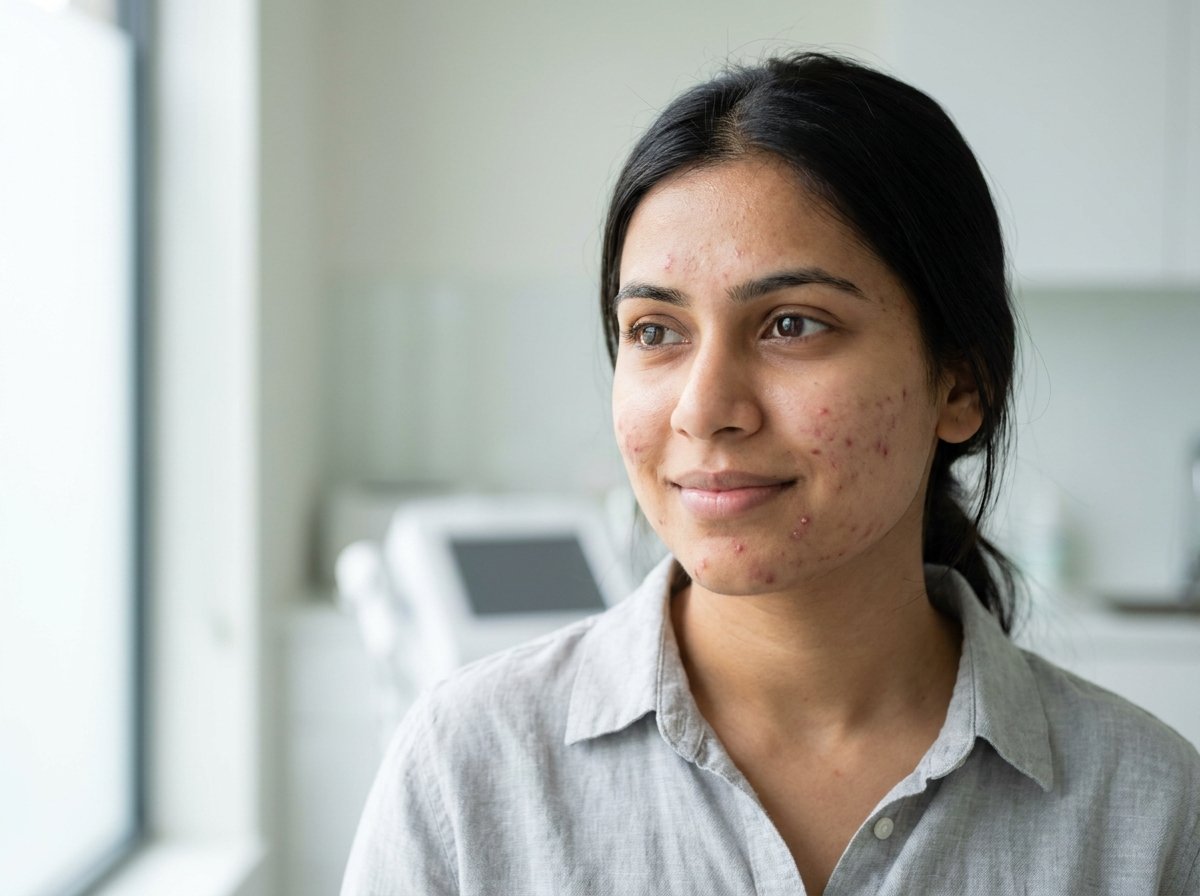
Acne is one of the most searched skin concerns in Delhi — and for good reason. Between the city’s heat, humidity, pollution and stress, it is one of the most challenging environments for acne-prone skin. Yet despite how common it is, a large number of patients come to us having tried multiple over-the-counter products with little to show for it.
The reason is simple: not all acne is the same. What works for hormonal acne rarely works for comedonal acne. What clears mild breakouts will not touch nodular or cystic acne. Effective treatment starts with an accurate diagnosis — and that is where a dermatologist makes all the difference.
This guide walks you through every major acne treatment option available at a clinical level in Delhi, so you understand what to expect before you walk through our door.
Why Delhi’s Climate Makes Acne Worse
Delhi sits in a semi-arid zone with extreme seasonal swings. Summers bring intense heat and sweating, which increases sebum production and clogs pores. The monsoon brings humidity, creating a warm, moist environment where bacteria thrive. Winters are dry, yet pollution levels spike dramatically — and particulate matter has been shown to aggravate acne by triggering skin inflammation.
Add to this the psychological stress that is part of daily life in a metro, and the hormonal fluctuations it causes, and it becomes clear why acne is so persistent in this city.
Understanding Your Acne First
Before any treatment can be prescribed, your dermatologist will classify your acne. This is not a formality — the classification directly determines the treatment path.
Comedonal acne consists of whiteheads and blackheads. Pores are clogged but not infected. This form responds well to topical retinoids and superficial chemical peels.
Inflammatory acne includes red papules and pustules. There is bacterial involvement. Treatment typically requires a combination of topical antibiotics or benzoyl peroxide alongside peels or laser.
Nodular and cystic acne is the most severe form. Large, painful lumps form deep within the skin and frequently leave scars. Oral medications — including isotretinoin in appropriate cases — combined with in-clinic procedures are required.
Hormonal acne tends to appear along the jawline and chin, often worsening around the menstrual cycle. Treatment here involves hormonal management alongside topical therapies.
Treatment Options Available at House of Aesthetics
1. Topical and Oral Prescription Therapy
The foundation of acne management. Depending on the type and severity of your acne, your dermatologist may prescribe retinoids, topical antibiotics, azelaic acid, or benzoyl peroxide formulations. For moderate to severe acne, oral antibiotics or hormonal therapy may be added. In cases of severe cystic acne, isotretinoin (Accutane) remains the most effective long-term solution.
Prescription therapy is rarely sufficient on its own for moderate-to-severe acne. In-clinic procedures accelerate results significantly.
2. Chemical Peels for Acne
Chemical peels are one of the most effective and commonly used treatments for active acne in India. By applying a controlled acid solution to the skin, peels exfoliate the surface layer, unclog pores, reduce bacterial load and calm inflammation.
- Salicylic acid peels (BHA) are ideal for oily, acne-prone skin. Salicylic acid is oil-soluble, meaning it penetrates into the pore to dissolve the sebum plugging it — making it particularly effective for comedonal and mild inflammatory acne.
- Glycolic acid peels (AHA) work on the skin’s surface, improving texture and reducing post-acne marks alongside active breakouts.
- Mandelic acid peels are gentler and well-suited for sensitive or darker Indian skin tones, where stronger peels carry a risk of post-inflammatory hyperpigmentation (PIH).
- Combination peels such as Jessner’s solution or modified Unna’s paste can address multiple concerns simultaneously.
Chemical peels at House of Aesthetics are performed by our dermatologist, not a therapist — which ensures the right peel is selected for your skin tone, acne type and sensitivity level.
3. HydraFacial for Mild Acne and Congested Skin
HydraFacial MD Elite is a three-step treatment that deeply cleanses, extracts and hydrates the skin without any downtime. For patients with congested pores, mild comedonal acne or those wanting to maintain clearer skin between treatments, HydraFacial is an excellent option.
It is particularly popular as a preparatory treatment before a peel or laser session, as it ensures the skin is clean, balanced and ready.
4. Laser Treatments for Active Acne
Lasers target acne through multiple mechanisms — reducing sebum production, killing the bacteria responsible for breakouts (P. acnes) and reducing the inflammation driving each spot.
- QSwitch Nd:YAG laser delivers controlled energy that reduces sebum gland activity and bacterial load. It is safe for Indian skin tones and involves no downtime.
- Laser toning sessions can be added to a broader acne management protocol for patients whose acne is compounded by oiliness and early pigmentation.
For patients already dealing with acne scars alongside active acne, CO2 fractional laser is discussed at a later stage — once active breakouts are under control.
5. Comedone Extraction and Drainage (Medical Grade)
For patients with closed comedones or large cysts that need immediate decompression, extraction performed under sterile clinical conditions prevents scarring and speeds resolution. This is very different from salon extractions — the technique, instruments and post-extraction care are specific to dermatological practice.
Which Treatment Is Right for You?
| Acne Type | Recommended First-Line Treatments |
|---|---|
| Mild comedonal | Topical retinoid + salicylic peel |
| Mild inflammatory | Topical antibiotic + glycolic/salicylic peel |
| Moderate inflammatory | Oral antibiotic + peel + laser toning |
| Hormonal jawline acne | Hormonal therapy + mandelic peel |
| Severe nodular/cystic | Oral isotretinoin + medical extraction |
| Post-acne marks (PIH) | Peels + laser toning + targeted topicals |
The honest answer is that most patients need a combination approach — prescription therapy for the biology underneath, and in-clinic treatments to accelerate visible improvement and prevent scarring.
How Many Sessions Will I Need?
There is no universal answer, because it depends on your acne grade, your skin’s response and your consistency with the home-care regimen prescribed.
As a general guide, patients with mild-to-moderate acne typically see significant improvement after 4–6 chemical peel sessions spaced 2–3 weeks apart, combined with the prescribed home-care routine. Laser sessions are usually recommended in a course of 4–6 as well.
The most important thing to understand is that acne is a medical condition, not a temporary inconvenience. Managing it properly requires patience and a structured protocol — not a one-session fix.
The Scar Question: Address Acne First
Patients often ask about acne scar treatment at the same time as active acne. The rule is consistent across dermatology: active acne must be brought under control before scar treatment begins. Treating scars on skin that still has active breakouts leads to new scars forming, wasted treatment and wasted money.
Once acne is stable and controlled, we can discuss the right approach to scar treatment — which may include MNRF, CO2 laser, subcision or a combination. You can read more about this on our acne scar treatment page.
Why See a Dermatologist Rather Than a Salon or General GP?
Delhi has no shortage of skin care centres offering “acne facials” and extraction services. The problem is that without a proper diagnosis, these treatments can make acne worse — particularly if they involve manual extraction on inflamed, cystic acne or if they use products that are too harsh for your skin barrier.
A dermatologist classifies your acne correctly, rules out conditions that mimic acne (such as rosacea or folliculitis), prescribes the appropriate medications, and plans a structured course of in-clinic treatment that is specific to your skin.
At House of Aesthetics, every acne consultation is conducted by our dermatologist — not a therapist or counsellor. Your treatment plan is written by a qualified physician, which matters enormously for a medical condition like acne.
Ready to Start Your Acne Treatment in Delhi?
If you are tired of trying products that do not work and want a proper, structured diagnosis and treatment plan, book a consultation at House of Aesthetics. We are based in Greater Kailash, South Delhi, and serve patients from Defence Colony, Hauz Khas, Lajpat Nagar, South Extension and across the city.
Call or WhatsApp us to book your slot. Clear skin is achievable — it starts with the right diagnosis.
This article has been reviewed and approved by the dermatologist at House of Aesthetics, Greater Kailash, Delhi. It is intended for informational purposes and does not replace a clinical consultation.