
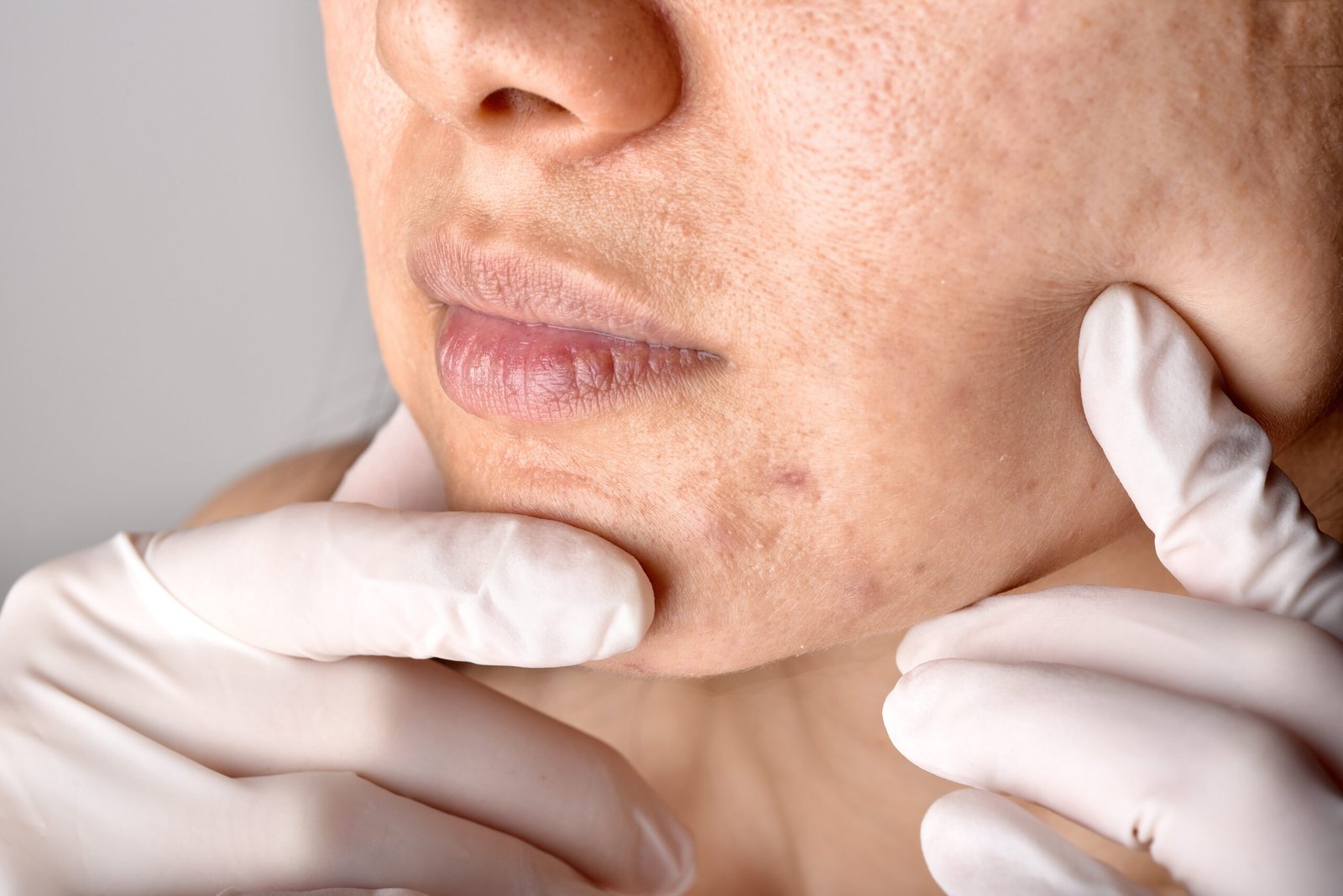
One of the most common frustrations patients bring to a dermatologist consultation is having tried a treatment that “should have worked” and seeing little to no change. With acne scars, this usually comes down to one thing: not every scar is the same, and not every treatment addresses every scar type. As the best dermatologist in Delhi for acne and scarring concerns, Dr. Neha Khuraana’s approach at House of Aesthetics starts with identifying exactly what kind of scarring you have before recommending anything.
Understanding the Different Types of Acne Scars
Acne scars generally fall into a few distinct categories, and this classification matters more than most patients realize. A quick visual assessment by a trained dermatologist can usually identify which types are present within minutes, which is why an in-person consultation tends to produce a far more useful treatment plan than a generic online recommendation.
Ice Pick Scars
Narrow, deep, and pitted — these go deeper into the skin than other scar types and are typically the most resistant to surface-level treatments alone.
Boxcar Scars
Broader, with defined edges and a somewhat rectangular depression. These respond reasonably well to a combination of resurfacing and volume-based approaches.
Rolling Scars
Shallow, wave-like depressions caused by bands of scar tissue pulling on the skin from underneath. These often respond best to treatments that break up that underlying tissue, not just resurface the top layer.
Post-Inflammatory Hyperpigmentation
Technically not a scar but often mistaken for one — these are the dark or red marks left behind after acne heals. They usually fade with time and targeted pigmentation treatment, without needing more invasive scar-revision procedures.
Matching Treatment to Scar Type
Because these scar types behave so differently, a single-treatment approach rarely produces the best outcome. Here’s how the main options generally map to scar type:
Chemical Peels
Best suited for surface texture irregularities and post-inflammatory marks. Less effective on deep ice pick or rolling scars on their own, though useful as part of a combined plan.
Microneedling (including MNRF)
Works by stimulating collagen production through controlled micro-injury, and is particularly useful for rolling scars and overall texture improvement. Adding radiofrequency (MNRF) increases the depth of stimulation, which can help with slightly deeper scarring.
Laser Resurfacing
Effective for boxcar scars and general textural unevenness by removing damaged surface layers and encouraging smoother regrowth. Downtime varies depending on the intensity of the laser used.
Subcision
A more targeted procedure specifically for rolling scars, where the fibrous bands pulling the skin down are released from underneath, allowing the depression to lift.
Why Combination Treatment Plans Are Usually More Effective
Most patients with acne scarring have more than one scar type present at once — a mix of rolling and boxcar scars, for instance, plus some lingering pigmentation. This is why single-modality marketing (a clinic that only offers “laser for acne scars”) often underdelivers. A more realistic plan usually layers two or three approaches over several months, adjusting based on how the skin responds at each stage.
At House of Aesthetics, this staged approach is standard practice — starting with the least invasive step that’s likely to help, and escalating only where needed, rather than defaulting to the most intensive (and expensive) option from the outset.
What to Expect From an Acne Scar Consultation
A proper acne scar consultation should include:
- A close visual assessment to categorize your specific scar types
- An honest read on how much active acne is still present — treating scars while acne is still active tends to produce poor results
- A realistic timeline, since scar improvement is gradual and measured in months, not weeks
- A staged plan rather than a single “fix-all” procedure
Setting Realistic Expectations
It’s worth being direct about this: most acne scar treatments improve appearance significantly rather than erasing scarring completely, particularly for deeper ice pick or long-standing scars. A dermatologist who promises complete removal in a single session is usually overselling. The more reliable marker of a good clinic is one that explains what’s achievable for your specific scarring, not what sounds most impressive in a consultation.
Finding the Right Dermatologist for Acne Scar Treatment in South Delhi
Because acne scar treatment often requires multiple sessions over months, continuity with the same dermatologist matters more here than for a one-off cosmetic procedure. House of Aesthetics, located in South Delhi and easily reached from Greater Kailash I and II, structures scar treatment plans around seeing the same doctor throughout your course rather than rotating practitioners between sessions.
Related Reading
- Best Dermatologist in Greater Kailash: Dr. Neha Khuraana’s Credentials & Approach
- Chemical Peel vs Microneedling vs Laser for Pigmentation
The Bottom Line
Acne scarring responds best to a treatment plan matched to your specific scar type, not a generic package. If you’ve tried a treatment before without much change, it’s worth getting a proper scar-type assessment before trying again. House of Aesthetics offers consultations with Dr. Neha Khuraana to map out a plan built around your actual scarring, not a one-size-fits-all protocol.