Achieving a naturally refreshed and youthful appearance with Botox requires a nuanced understanding of facial anatomy and specific treatment approaches for different areas. For instance, treating “Frown Lines and Crow’s Feet: Why They Need Different Botox Approaches” is crucial because these distinct wrinkle types originate from different muscle actions, necessitating tailored injection techniques and dosing for optimal, natural-looking results.
Key Takeaways
- Frown lines (glabellar lines) are vertical wrinkles between the eyebrows caused by frowning, while crow’s feet are lateral wrinkles at the outer corners of the eyes from smiling and squinting.
- Botox injections for frown lines target the procerus and corrugator muscles, aiming to relax the downward pull between the brows.
- Botox for crow’s feet targets the orbicularis oculi muscle, requiring precise, superficial injections to smooth lines without affecting natural expressions.
- The required Botox dosage differs significantly, with frown lines often needing more units than crow’s feet due to larger, stronger muscles.
- Both areas can be safely and effectively treated in the same session, provided a skilled practitioner customises the approach.
- The longevity of Botox can vary between areas, typically 3-4 months, influenced by muscle activity and individual metabolism.
- Choosing an experienced aesthetic professional, such as Dr. Neha Khurana at House of Aesthetics in Delhi, is paramount to avoid common mistakes and achieve superior outcomes.
What’s the Difference Between Frown Lines and Crow’s Feet?
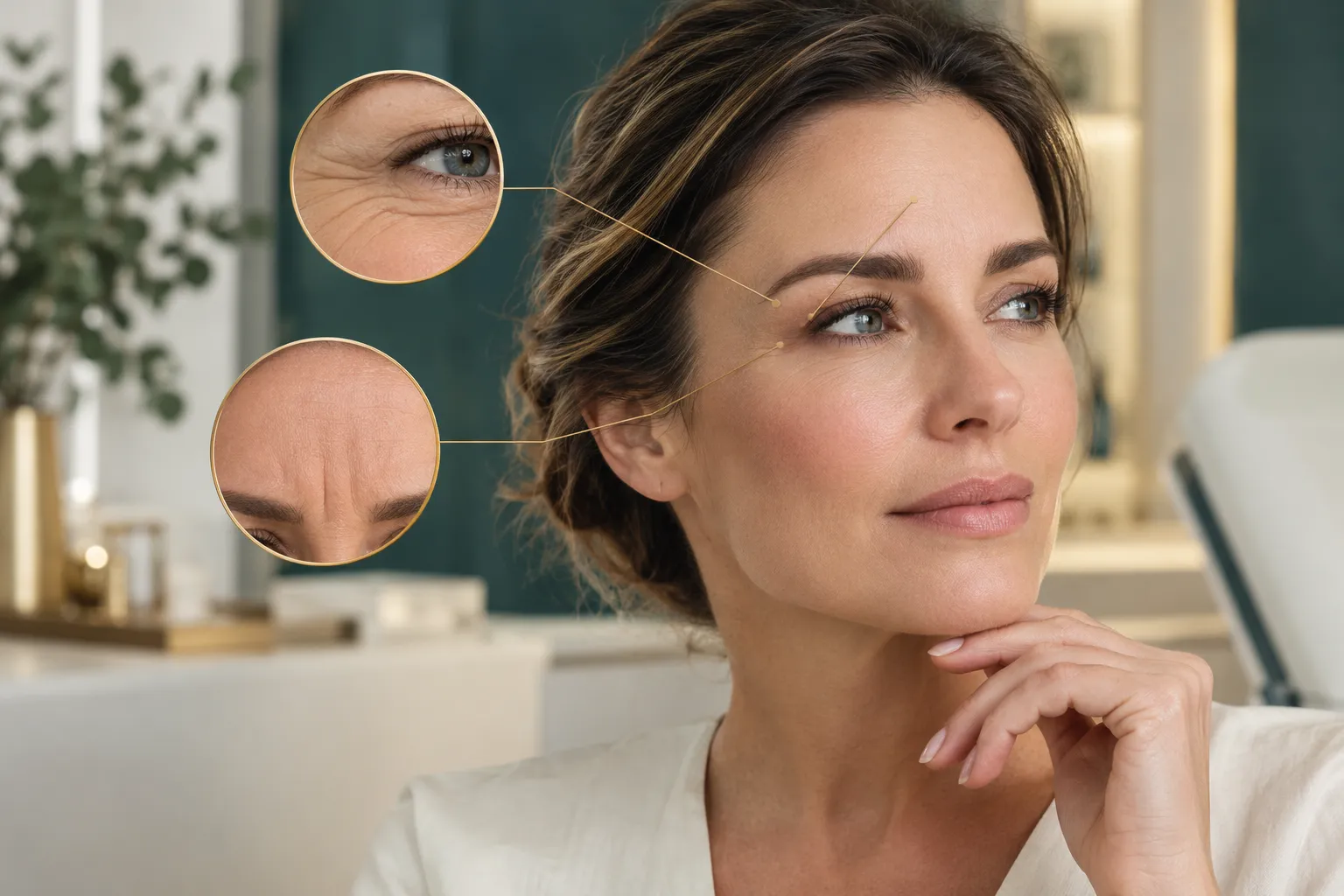
Frown lines, also known as glabellar lines or “11s,” are vertical creases that appear between the eyebrows, while crow’s feet are fine lines that radiate outwards from the corners of the eyes. The key distinction lies in their location and the specific facial muscles responsible for their formation, which dictates why they need different Botox approaches. Frown lines are primarily formed by the corrugator supercilii and procerus muscles, activated when we scowl or concentrate, whereas crow’s feet result from the repeated contraction of the orbicularis oculi muscle during smiling, squinting, or laughing.
Why Do Frown Lines and Crow’s Feet Need Different Botox Treatment?
Frown lines and crow’s feet require different Botox treatment strategies because they involve distinct muscle groups with varying strengths and anatomical locations, necessitating tailored injection depths, diffusion patterns, and unit dosages. The muscles causing frown lines are relatively deep and strong, requiring injections into specific points within the glabellar complex to relax the downward and inward pull. In contrast, the orbicularis oculi muscle responsible for crow’s feet is superficial and wraps around the eye, demanding very precise, shallow injections to avoid affecting the delicate eye area while effectively smoothing the lines. An incorrect approach can lead to unnatural results or complications.
How Much Botox Do You Need for Frown Lines vs. Crow’s Feet?
The amount of Botox needed for frown lines compared to crow’s feet generally differs due to the size and strength of the underlying muscles, with frown lines often requiring more units. Typically, treating frown lines might involve 20-30 units, distributed across several injection points in the glabellar area. For crow’s feet, the dosage is usually less, often 4-12 units per side, requiring precise placement into the superficial orbicularis oculi muscle to soften lines without impacting natural expression. These are general estimates; the exact dosage is always determined by a qualified practitioner like Dr. Neha Khurana at House of Aesthetics Delhi, based on individual muscle strength, wrinkle severity, and desired outcome.
Can Botox Treat Both Frown Lines and Crow’s Feet at the Same Time?
Yes, Botox can effectively treat both frown lines and crow’s feet during the same session, as long as a skilled medical professional performs the injections. Combining treatments for these areas is a common practice at House of Aesthetics Delhi, offering a comprehensive approach to facial rejuvenation that addresses multiple signs of aging concurrently. This approach allows for a more harmonised result across the upper face, enhancing overall aesthetic balance.
What Causes Frown Lines Between Eyebrows?
Frown lines between the eyebrows are primarily caused by repetitive contractions of two key muscles: the corrugator supercilii, which pulls the eyebrows inward and downward, and the procerus muscle, which pulls the skin between the brows downwards. These actions are triggered by expressions such as frowning, squinting, or deep concentration. Over time, as skin loses elasticity due to aging, sun exposure, and genetic factors, these dynamic wrinkles become static, meaning they are visible even when the face is at rest. Addressing these lines is a common reason individuals seek anti-ageing treatments India.
Why Do Crow’s Feet Happen Around the Eyes?
Crow’s feet develop around the eyes because of the repeated contractions of the orbicularis oculi muscle, which encircles the eye and is responsible for blinking, squinting, and smiling. Each time we make these expressions, the skin at the outer corners of the eyes creases. Given that the skin around the eyes is significantly thinner and more delicate than other facial areas, it is particularly susceptible to forming these fine lines and wrinkles over time. Factors such as sun exposure, collagen loss, and genetics further accelerate their appearance. For those looking to address these specific concerns, an expert consultation at an aesthetic clinic Delhi is highly recommended.
How Long Does Botox Last on Frown Lines Compared to Crow’s Feet?
The duration of Botox effects typically lasts 3 to 4 months for both frown lines and crow’s feet, though individual results can vary slightly depending on factors like muscle strength, metabolism, and lifestyle. Some individuals may experience the effects lasting a bit longer in one area than another. For instance, in areas with higher muscle activity, like the frown lines for some individuals, the effects might subtly begin to wear off sooner. Regular maintenance treatments, generally every 3-4 months, are recommended to sustain the desired smooth appearance, as discussed during consultations at House of Aesthetics. For more information on various treatments for facial lines, refer to our article on Fine Lines And Wrinkles Treatment.
Botox for Frown Lines Cost vs. Crow’s Feet Treatment
The cost of Botox for frown lines versus crow’s feet treatment can vary based on the number of units required, the practitioner’s expertise, and the clinic’s location. Typically, treating frown lines might incur a higher cost per area because it often requires more units of Botox due to the stronger muscles involved. However, many clinics, including House of Aesthetics, offer package pricing for treating multiple areas simultaneously, which can be more cost-effective. During your personalised consultation with Dr. Neha Khurana, you will receive a transparent breakdown of the costs involved for your specific treatment plan.
Best Botox Technique for Treating Crow’s Feet
The best Botox technique for treating crow’s feet involves multiple superficial injections of small, precise doses into the orbicularis oculi muscle, distributed across the lateral aspects of the eyes. This “micro-droplet” approach aims to relax the muscle fibres responsible for the radiating lines while preserving the natural movement and expression of the eye area. An expert injector, such as Dr. Neha Khurana, ensures that the injections are placed strategically to avoid affecting the eyelid or causing unwanted effects, leading to a smooth, natural-looking result without a frozen appearance. This precision is why it’s crucial to choose a top dermatologist in Delhi for such treatments.
Can You Get Botox for Just Frown Lines Without Crow’s Feet?
Yes, absolutely. You can choose to get Botox for just frown lines without treating crow’s feet, as treatments are highly customisable to individual needs and aesthetic goals. Many patients opt to target specific concerns, and a skilled practitioner like Dr. Neha Khurana at House of Aesthetics Delhi will develop a treatment plan tailored precisely to the areas you wish to address. This flexibility allows for a personalised approach to anti-ageing.
What Happens if You Use Too Much Botox on Crow’s Feet?
Using too much Botox on crow’s feet can lead to an unnatural, “frozen” appearance, where the ability to smile or squint naturally is significantly diminished. In some cases, it might even lead to temporary eyelid drooping (ptosis) if the Botox diffuses too widely to the levator palpebrae superioris muscle, although this is rare with proper technique. The goal is always to soften the lines while maintaining natural facial animation, which is why precise dosing and expert injection by a qualified professional are critical to achieve optimal results and avoid complications.
Do Frown Lines Come Back Faster Than Crow’s Feet After Botox?
Generally, the return of muscle activity and the reappearance of frown lines and crow’s feet after Botox treatment occur at similar rates, typically around 3 to 4 months. However, individual factors, such as the strength of the underlying muscles, the initial dosage administered, and personal metabolism, can slightly influence the perceived speed of recurrence for each area. Muscles that are inherently stronger or more frequently used might begin to show subtle signs of movement returning slightly sooner. For consistent results, regular follow-up treatments at a trusted cosmetic clinic Delhi are advised.
Is Botox Better Than Fillers for Crow’s Feet?
Botox and dermal fillers serve different purposes for treating crow’s feet, making neither inherently “better” but rather suitable for different types of lines. Botox is ideal for dynamic crow’s feet, which are visible primarily during facial expressions, by relaxing the muscles that cause them. Dermal fillers, on the other hand, are typically used for static lines or volume loss, where depressions exist even when the face is at rest. For the fine lines of crow’s feet, Botox is generally the preferred choice as it directly addresses the muscle movement causing the wrinkles. A comprehensive consultation can determine the most appropriate treatment, or combination of treatments, for your specific concerns. For a detailed comparison of these treatments, read our article, “Botox Vs Dermal Fillers Whats The Difference.”
Common Mistakes People Make with Botox for These Areas
Common mistakes people make with Botox for frown lines and crow’s feet often stem from inexperienced injectors or a lack of understanding of facial anatomy, leading to undesirable outcomes. These mistakes include:
- Underdosing or Overdosing: Too little Botox may not achieve the desired effect, while too much can result in a “frozen” or unnatural appearance.
- Incorrect Injection Placement: Misplaced injections can lead to complications such as eyelid ptosis (drooping), eyebrow asymmetry, or a heavy brow.
- Ignoring Individual Anatomy: Each face is unique, and a generic approach without considering individual muscle strength and facial structure can yield suboptimal results.
- Choosing an Unqualified Practitioner: Opting for treatments from non-medical professionals significantly increases the risk of complications and unsatisfactory outcomes.
- Having Unrealistic Expectations: Patients sometimes expect complete eradication of all lines, which isn’t always possible or desirable for a natural look.
- Neglecting Aftercare Instructions: Failing to follow post-treatment guidelines can impact results or cause bruising.
To avoid these pitfalls, it’s crucial to consult with a highly experienced and certified aesthetic physician, such as Dr. Neha Khurana at House of Aesthetics, a leading skin clinic in South Delhi, who possesses a deep understanding of facial aesthetics and advanced injection techniques.
Conclusion
Treating frown lines and crow’s feet effectively with Botox is an art and a science, demanding a precise understanding of facial anatomy and tailored injection techniques for each area. While both respond beautifully to Botox, their underlying muscular causes necessitate distinct approaches to dosing and placement to ensure natural-looking, harmonious results. Choosing a qualified and experienced practitioner is paramount for achieving safe and satisfying outcomes.
At House of Aesthetics, led by Dr. Neha Khurana, we specialise in personalised Botox treatment Delhi, ensuring every client receives a bespoke plan designed to enhance their natural beauty. If you are considering addressing your frown lines or crow’s feet, we invite you to schedule a consultation at our premium cosmetic clinic Delhi. Let us guide you towards a refreshed, youthful appearance with expert care and advanced aesthetic solutions.
FAQ
Q1.What is the ideal age to start Botox for frown lines and crow’s feet?
There isn’t a single “ideal” age; it depends on when dynamic wrinkles start becoming prominent. Many individuals begin in their late 20s or early 30s as a preventative measure or when they notice lines becoming static.
Q2. Is Botox treatment painful for frown lines and crow’s feet?
Botox injections use very fine needles, and most patients report only mild discomfort, often described as a slight pinch. Topical anaesthetic creams can be applied beforehand to minimise any sensation.
Q3. How quickly will I see results after Botox for these areas?
Results typically become noticeable within 3-7 days, with the full effect usually visible after 10-14 days.
Q4. Can Botox completely erase deep frown lines and crow’s feet?
Botox can significantly soften and reduce the appearance of both dynamic and static lines. While it may not completely erase very deep, long-standing static wrinkles, it can make a dramatic improvement, often requiring combination with other treatments like dermal fillers for optimal outcomes.
Q5. Are there any side effects to Botox for frown lines or crow’s feet?
Common side effects are usually mild and temporary, including minor bruising, swelling, or redness at the injection sites. More serious side effects, like temporary eyelid drooping, are rare and typically occur only with inexperienced injectors.
Q5. How do I maintain my Botox results?
To maintain results, follow your practitioner’s aftercare instructions and schedule follow-up treatments every 3-4 months. A good skincare routine and sun protection also help.
Q6. Can men get Botox for frown lines and crow’s feet?
Yes, Botox is a popular and effective treatment for men seeking to reduce the appearance of frown lines and crow’s feet, often requiring slightly higher doses due to stronger facial muscles.
Q7. What should I avoid after getting Botox for these areas?
Avoid rubbing or massaging the treated areas, strenuous exercise, lying down for a few hours, and consuming alcohol for 24 hours post-treatment. Your doctor will provide detailed instructions.