Many people living with psoriasis notice that their skin worsens as Delhi turns cold and dry. Thicker plaques, more scaling and more itching often arrive just as the weather changes and the busy season of work, travel and family events begins. This guide explains why winter is difficult for psoriasis, which triggers matter most, and how a dermatologist approaches treatment, with insight from the team at House of Aesthetics in Greater Kailash.
What Psoriasis Is
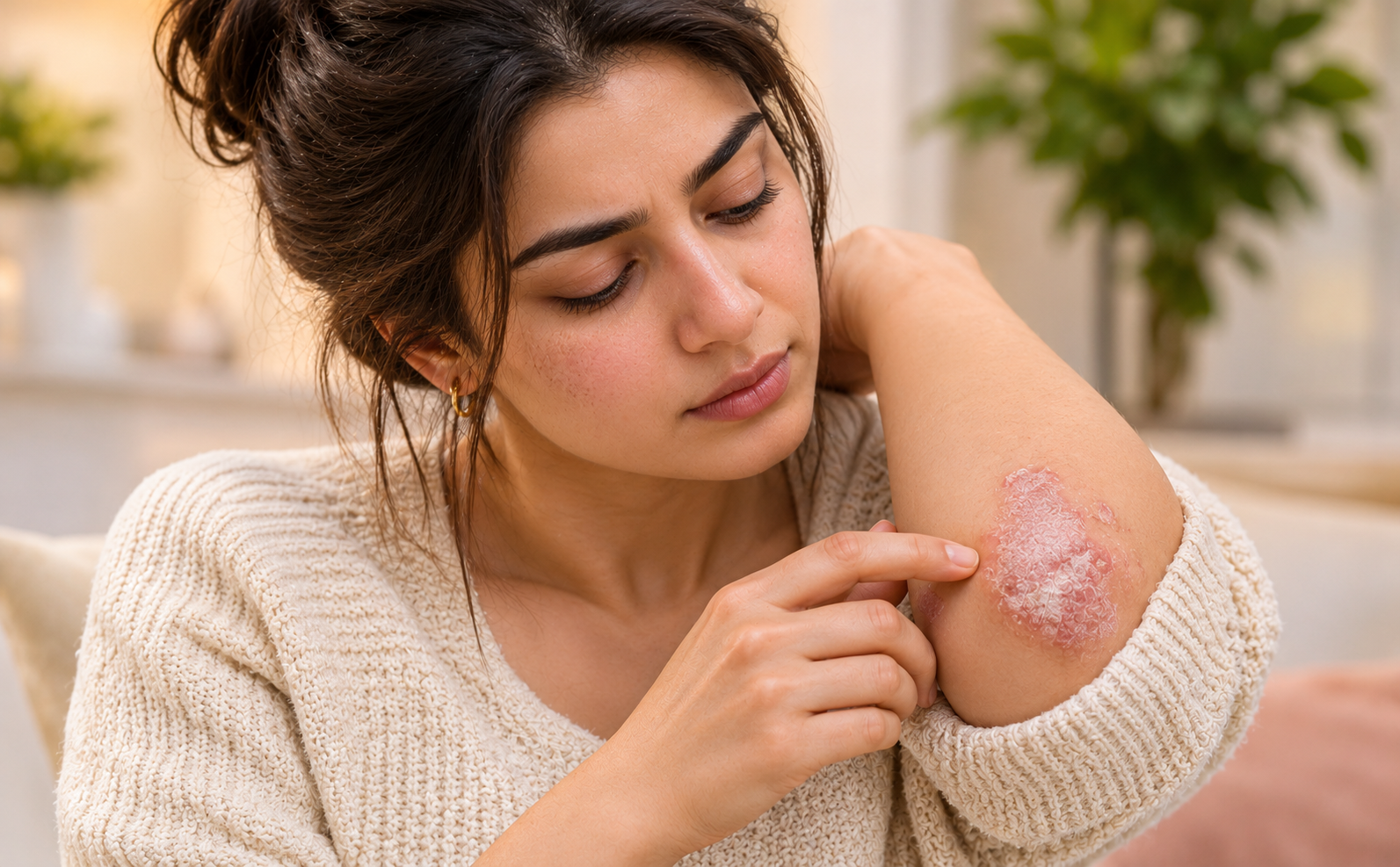
Psoriasis is a long-term, immune-related skin condition in which skin cells renew far faster than normal. The result is raised, red patches covered in silvery scales, commonly on the elbows, knees, scalp and lower back. It is not contagious, and it tends to come and go in cycles. Managing it is about control and prevention of flare-ups, not a one-time cure. The psoriasis treatment page gives an overview of how it is assessed and treated.
Why Winter Makes Psoriasis Worse
Cold, Dry Air
Low humidity pulls moisture out of the skin. Dry skin cracks more easily, and for psoriasis, cracks and irritation can trigger new patches. Indoor heaters add to the dryness.
Less Sunlight
Many patients find that natural sunlight calms their psoriasis. Shorter days and heavier clothing mean less exposure, which can allow plaques to thicken.
Infections and Skin Injury
Winter colds, sore throats and other infections can set off flare-ups in some people. Scratching, tight woollens and friction can also trigger new patches on previously clear skin.
Seasonal Stress and Lifestyle Changes
Stress is one of the best-known psoriasis triggers. Festive and wedding season brings late nights, disrupted routines, richer food and more alcohol, all of which can contribute. If you are also noticing the effects of the festive period on your skin more broadly, read what dermatologists see every year after the festive season .
Daily Habits That Help Control Winter Flares
- Moisturise heavily and often. Thick, fragrance-free creams or ointments applied within minutes of bathing hold in moisture better than light lotions.
- Keep showers short and lukewarm. Hot water strips natural oils.
- Use a humidifier in rooms with heaters running.
- Choose soft fabrics such as cotton next to the skin, and avoid rough wool directly on plaques.
- Avoid picking or scratching, which can create new patches.
- Limit alcohol and avoid smoking, both linked to worse psoriasis.
- Protect your sleep through the busy season.
Stress, Mood and Psoriasis
The link between stress and psoriasis runs in both directions. Flare-ups cause stress and embarrassment, and stress can bring on flare-ups. Patients who feel low, anxious or withdrawn because of visible skin patches may benefit from support alongside skin treatment. House of Aesthetics brings dermatology and mental health care together, with Dr. Ashish Bansal available for patients who want help with the emotional side. Relevant pages include anxiety treatment and depression treatment, and our post on psychiatrist versus psychologist: whom to consult first helps you choose where to start.
Food, Weight and Psoriasis
No single diet cures psoriasis, but maintaining a healthy weight and eating balanced meals appear to help many patients. If you would like structured guidance, the clinic’s nutrition and diet counselling service can build a plan around your needs.
Psoriasis Treatment Options a Dermatologist May Discuss
Treatment depends on how widespread the psoriasis is, where it sits and how much it affects daily life. For milder cases, prescribed topical treatments and intensive moisturising are usually the starting point. More widespread or stubborn cases may call for other approaches, which your dermatologist will explain in detail. The key is to start early and review the plan as the seasons change, rather than waiting for a severe flare. Please avoid stopping or changing any prescribed medicine on your own.
Scalp Psoriasis
Winter often brings thick, flaky scalp patches that are mistaken for dandruff. Our comparison of scalp psoriasis versus dandruff explains how to tell them apart, and the scalp psoriasis treatment and dandruff treatment pages outline care for each.
Other Conditions That Look Similar
Not every scaly patch is psoriasis. Eczema is common in winter and needs a different approach, while fungal infections can also mimic plaques. See eczema versus fungal infection and the fungal infection treatment page for the differences. A proper diagnosis comes first.
When to See a Dermatologist
Book a consultation if patches are spreading, cracking or bleeding, if itching disturbs your sleep, if your nails are pitted or lifting, or if you develop joint pain or morning stiffness, which can signal psoriatic arthritis and needs prompt medical attention. If you have never seen a skin specialist, read what to expect at your first dermatologist visit.
Psoriasis Care in South Delhi
At House of Aesthetics, Dr. Neha Khuraana, regarded by many patients as the best dermatologist in Greater Kailash for long-term skin conditions, prioritises continuity: the same doctor, regular review and a plan adjusted to the season. The clinic serves patients from Greater Kailash I and II, Panchsheel Park, Alaknanda and Lajpat Nagar. Learn more in Best Dermatologist in Greater Kailash: Dr. Neha Khuraana’s Credentials and Approach.