Hair thinning is a concern that brings patients to a dermatologist later than it probably should — often after months of trying over-the-counter products with little change. PRP (Platelet-Rich Plasma) therapy has become one of the more requested treatments for early to moderate hair thinning, but it’s also one where expectations need to be set carefully. Here’s what the treatment actually involves, how many sessions it typically takes, and who it genuinely works well for.
What PRP Actually Is
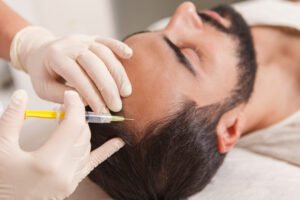
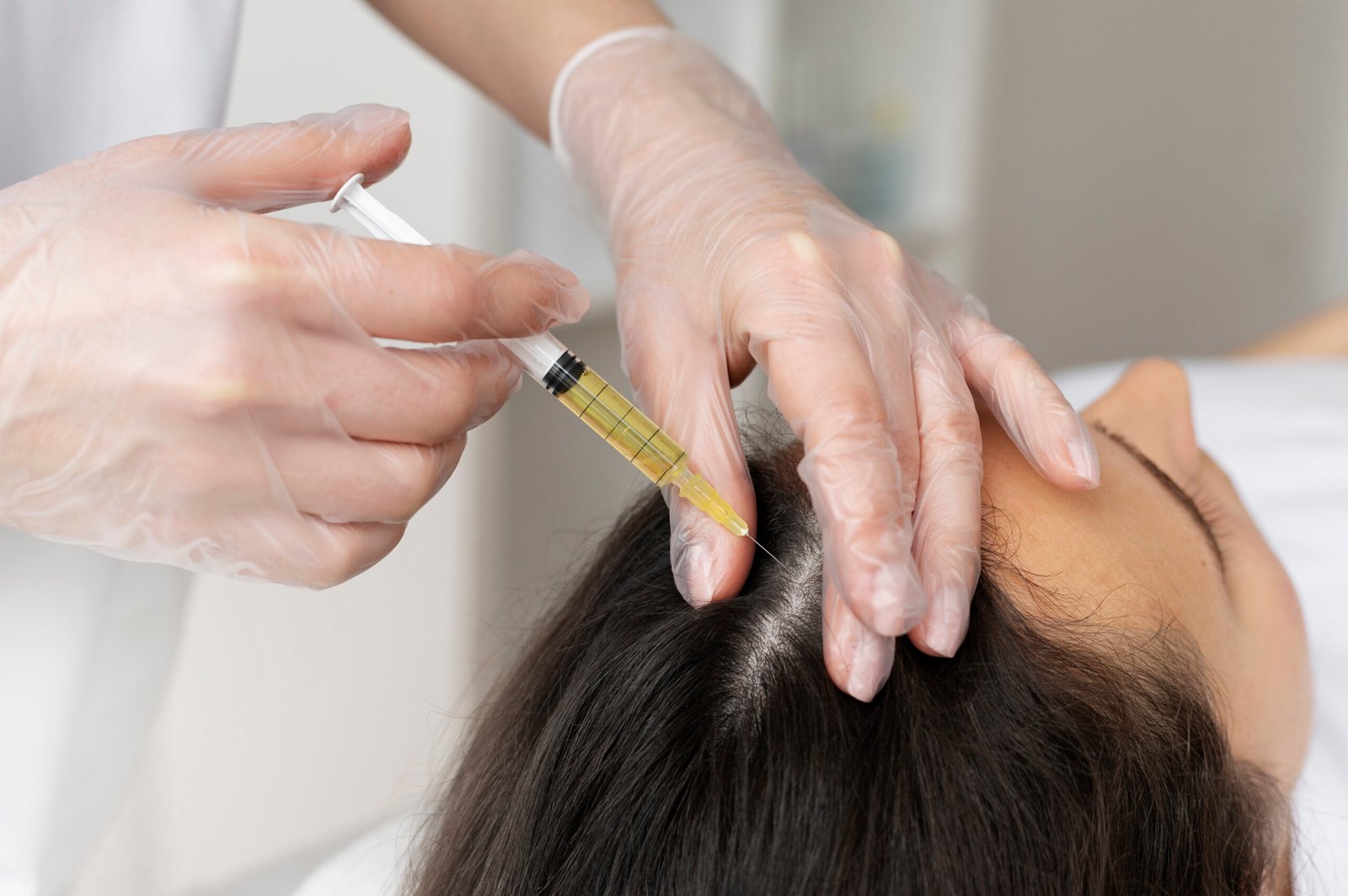
PRP therapy uses a small sample of your own blood, spun in a centrifuge to concentrate the platelets, which are then injected into the scalp in areas of thinning. Platelets contain growth factors that are believed to stimulate hair follicles and improve the local scalp environment for hair growth. Because it uses your own blood, the risk of allergic reaction is low, which is part of why it’s become a popular option alongside more traditional topical and oral treatments.
Who PRP Works Best For
PRP tends to show the most benefit in specific situations:
- Early to moderate androgenetic (pattern) hair thinning, where follicles are miniaturizing but not yet dormant
- Patients looking to slow further thinning rather than regrow hair in completely bald areas
- Those who want a complement to other treatments (like minoxidil or oral options) rather than a standalone fix
It’s important to be direct here: PRP is generally less effective on long-standing bald patches where follicles have been dormant for years — these cases are usually better served by exploring hair transplant options instead. A dermatologist should assess how active your hair loss is and how miniaturized your follicles are before recommending PRP as a primary treatment.
How Many Sessions Does PRP Actually Take?
This is one of the most common questions patients ask, and one where clinics vary in how honestly they answer. A realistic protocol typically looks like:
- Initial phase: A series of sessions spaced around four to six weeks apart, often three to four sessions to start
- Maintenance phase: Follow-up sessions every few months to sustain results, since PRP’s effects are not permanent
Visible change is usually gradual, appearing over a few months rather than immediately after a single session. Clinics that promise dramatic regrowth after one or two sessions are setting expectations that don’t match how the biology of hair growth actually works.
What Affects PRP Cost
Number of Sessions in the Package
Single-session pricing looks appealing but rarely reflects what most patients actually need. Ask for a package price across the realistic initial phase, not just a per-session number.
Preparation Method
The centrifuge process and preparation protocol used affects the concentration and quality of the platelet-rich plasma delivered — this is a detail worth asking about rather than assuming all PRP preparations are equivalent.
Combination With Other Treatments
PRP is often paired with microneedling of the scalp or other adjunct treatments to enhance absorption, which affects total cost but can also improve outcomes.
What a PRP Consultation Should Cover
Before starting PRP, a proper consultation should assess:
- Your specific pattern and stage of hair thinning
- Any underlying causes (thyroid issues, nutritional deficiencies, stress) that should be addressed alongside PRP rather than instead of investigating them
- Realistic expected outcomes based on how advanced the thinning is
- Whether PRP alone is appropriate, or whether it should be combined with a broader treatment plan
How Dr. Neha Khuraana’s Team Approaches Hair Thinning
At House of Aesthetics, PRP is positioned as part of a broader hair assessment rather than a default first recommendation. As the best dermatologist in Delhi for combined skin and hair concerns, Dr. Khuraana’s approach typically starts with ruling out underlying medical causes of hair thinning before committing to a PRP protocol, since treating a thyroid-related or nutritional cause separately can significantly change how effective PRP ends up being.
Setting the Right Expectations
PRP works best as a way to slow progression and modestly improve density in areas of early thinning — not as a solution for advanced baldness or a substitute for addressing an underlying medical cause. Patients who go in with this understanding tend to be considerably more satisfied with results than those expecting a dramatic transformation.
Finding the Right Clinic in South Delhi
Because PRP requires multiple sessions over months, and results depend heavily on accurate initial diagnosis, it’s worth choosing a dermatologist-led clinic over a purely aesthetic setup for this specific treatment. House of Aesthetics, based in South Delhi and accessible from Greater Kailash and nearby areas, structures PRP protocols around ongoing assessment of how your scalp is responding, adjusting the plan where needed.
Related Reading
- Best Dermatologist in Greater Kailash: Dr. Neha Khuraana’s Credentials & Approach
- Laser Hair Removal in Delhi
The Bottom Line
PRP can be a genuinely useful tool for early to moderate hair thinning when the underlying cause has been properly assessed and expectations are realistic. If you’re dealing with hair thinning and want to understand whether PRP is the right starting point for your specific case, House of Aesthetics offers consultations with Dr. Neha Khuraana to map that out.