Nearly 50% of the global adult population experiences some form of flaking on the head, yet many people mistakenly treat a chronic autoimmune condition with a simple drugstore shampoo. Distinguishing between Scalp Psoriasis vs Dandruff: How to Tell the Difference is more than just a matter of curiosity; it is the first step toward effective medical management. While both conditions result in visible flakes and an itchy scalp, their biological origins and long-term health implications are vastly different.
At House of Aesthetics (HOA) in Delhi, we frequently consult with patients who have spent years using aggressive anti-dandruff treatments on what is actually an inflammatory skin condition. Under the guidance of Dr. Neha Khurana, our clinic focuses on precise diagnosis to ensure your scalp health is restored using science-backed protocols rather than guesswork.
Key Takeaways
- Dandruff is typically a localized skin shedding issue, while scalp psoriasis is a chronic autoimmune condition.
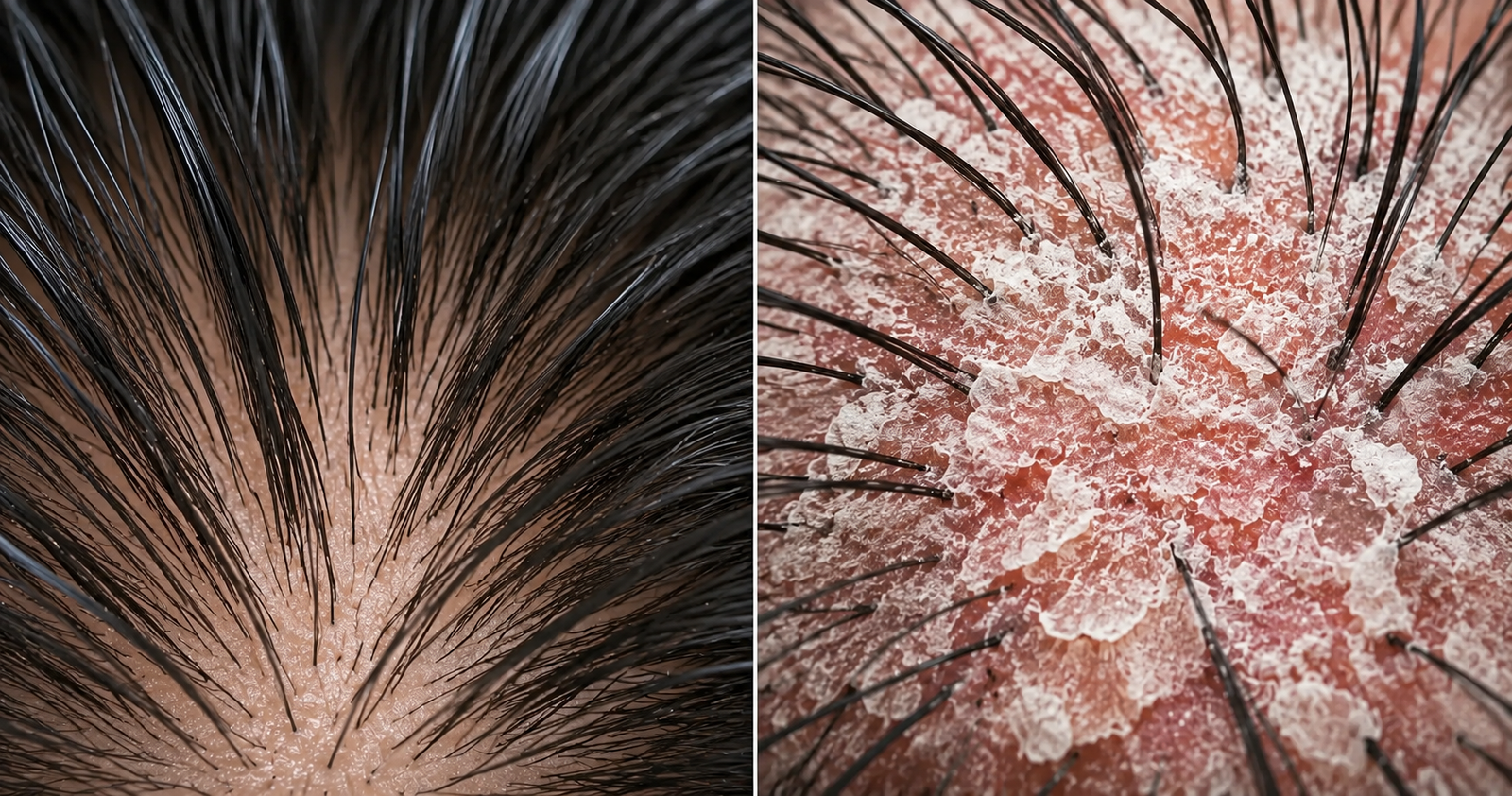
- Psoriasis presents as thick, silvery-white scales with well-defined borders that often extend beyond the hairline.
- Dandruff flakes are usually smaller, oily, and white or yellowish in color.
- Professional diagnosis is essential, as the wrong treatment can exacerbate scalp irritation and hair thinning.
Scalp Psoriasis vs Dandruff: How to Tell the Difference
To the untrained eye, white flakes on a dark shirt look the same. However, the underlying pathology of these two conditions is distinct. Scalp psoriasis occurs when the immune system sends faulty signals that speed up the growth cycle of skin cells. Instead of shedding every few weeks, skin cells pile up in days, creating thick “plaques.”
In contrast, dandruff (seborrheic dermatitis in its mildest form) is often linked to a sensitivity to Malassezia, a yeast-like fungus that lives on the scalp. This causes the skin to shed more rapidly than normal, but without the intense inflammatory response seen in psoriasis.
Visual Cues and Texture
When evaluating Scalp Psoriasis vs Dandruff: How to Tell the Difference, the physical appearance is your first clue:
- Color and Shine: Psoriasis scales have a characteristic silvery-white sheen and appear “powdery.” Dandruff flakes look like translucent skin or may have a yellowish, oily tint.
- Scale Thickness: Psoriasis creates thick, raised patches that feel bumpy to the touch. Dandruff consists of thin, flat flakes that easily detach from the scalp.
- Location: Dandruff stays confined to the hair-bearing areas of the scalp. Scalp psoriasis frequently migrates, appearing on the forehead, the back of the neck, or behind the ears.
Quick Comparison Table
| Feature | Dandruff | Scalp Psoriasis |
|---|---|---|
| Appearance | Small, oily, white/yellow flakes | Thick, silvery-white scales (plaques) |
| Scalp Condition | Oily or dry scalp | Very dry, inflamed, or bleeding skin |
| Area Covered | Entire scalp randomly | Defined patches; may cross hairline |
| Itch Intensity | Mild to moderate | Intense; may feel like burning |
Understanding Scalp Psoriasis Symptoms
If you suspect your condition is more than just a seasonal dry scalp, look for specific scalp psoriasis symptoms. Unlike dandruff, psoriasis is often accompanied by a “tight” feeling on the scalp. Because the plaques are thick, they can crack and bleed, a phenomenon known as the Auspitz sign.
Patients often report that their scalp feels sore or tender. In severe cases, the heavy scaling can temporarily interfere with hair growth, leading to thinning in the affected areas. If you are noticing persistent redness and thick crusting, consulting the best dermatologist in Greater Kailash is vital to prevent permanent follicle damage.
Clinical Approaches to Scalp Psoriasis Treatment
Treating an autoimmune condition requires a medical strategy that goes beyond topical cleansing. At House of Aesthetics, our scalp psoriasis treatment plans are customized based on the severity of the flare-up and the patient’s medical history.
Dr. Neha Khurana emphasizes a multi-modal approach:
- Topical Corticosteroids: These reduce inflammation and slow down the rapid overproduction of skin cells.
- Salicylic Acid: Used as a “keratolytic” to soften and remove thick scales, allowing other medications to penetrate the skin.
- Phototherapy: Utilizing specific wavelengths of light to calm the immune response in the scalp.
- Biologicals: For systemic cases, advanced injectable medications may be recommended to target the internal cause of the inflammation.
For those struggling with more traditional flaking, our hair dandruff treatment options focus on rebalancing the scalp microbiome and controlling yeast levels through medical-grade formulations.
Managing the Condition at Home
While clinical intervention is primary, certain lifestyle adjustments can help manage flares. Many patients ask about scalp psoriasis home remedies. While these do not cure the condition, they can provide symptomatic relief.
- Coconut or Olive Oil: Applying warm oil can help soften scales before washing.
- Avoid Scratching: Picking at scales can lead to infections and “Koebnerization,” where trauma causes new psoriasis patches to form.
- Scalp Psoriasis Shampoo: Look for ingredients like coal tar or selenium sulfide. These are stronger than standard shampoos and help reduce both the itch and the scale buildup.
- Dietary Awareness: Some find relief by following foods that help dandruff and psoriasis, focusing on anti-inflammatory Omega-3 fatty acids and antioxidants.
Why Professional Diagnosis Matters in 2026
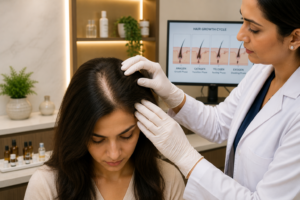
Self-diagnosing can be a costly mistake. Using a harsh scalp psoriasis shampoo on a scalp that is merely dry can cause chemical burns, while using a mild dandruff wash on psoriasis will yield no results. In 2026, advanced diagnostic tools like trichoscopy allow us at our skin clinic in South Delhi to view the scalp at high magnification. This allows Dr. Khurana to see the specific vascular patterns that distinguish psoriasis from other types of dermatitis.
Furthermore, scalp psoriasis is sometimes linked to psoriatic arthritis. Identifying the scalp symptoms early can lead to a broader health assessment that protects your joints and overall well-being.
Advanced Scalp Care at House of Aesthetics
House of Aesthetics is recognized as a top skin doctor destination because we combine luxury with clinical precision. We understand that scalp conditions can be embarrassing and physically uncomfortable. Our clinic provides a private, professional environment where you can discuss your concerns and receive a personalised skin treatment plan.
Whether you require intensive psoriasis treatment in Delhi or are looking for advanced hair restoration like GFC treatment, our team uses the latest technology to ensure results. We don’t just treat the flakes; we treat the underlying skin health.
Frequently Asked Questions
Q1. Can dandruff turn into psoriasis?
No. They are two different conditions with different causes. However, it is possible to have both seborrheic dermatitis and psoriasis at the same time, a condition sometimes called “sebopsoriasis.”
Q2. Is scalp psoriasis contagious?
Not at all. Since it is an autoimmune condition, you cannot “catch” it from someone else or spread it through shared combs or towels.
Q3. How often should I wash my hair if I have scalp psoriasis?
This depends on the treatment being used. Medicated shampoos often need to be used 2-3 times a week, but they must be left on the scalp for 5-10 minutes to be effective. Dr. Neha Khurana will provide a specific schedule during your consultation.
Q4. Can stress cause a psoriasis flare?
Yes, stress is a well-documented trigger for autoimmune responses. Managing stress through lifestyle changes can be a helpful addition to your medical treatment.
Conclusion
Distinguishing between Scalp Psoriasis vs Dandruff: How to Tell the Difference is the essential first step toward a clear scalp and restored confidence. While dandruff is a common nuisance, scalp psoriasis is a complex medical condition that requires expert intervention. In 2026, there is no reason to suffer through the discomfort of an itchy, flaking scalp.
If you are struggling to manage scalp irritation, trust the experts. House of Aesthetics Delhi, led by Dr. Neha Khurana, offers the most advanced diagnostic and therapeutic solutions in a premium clinical setting. Book your consultation at our South Delhi clinic today and take the first step toward a healthier, flake-free scalp.