If you have been Googling “how to remove dark spots” or “melasma treatment in Delhi,” you have likely noticed that the two terms — pigmentation and melasma — appear interchangeably across websites and social media. Yet they are not the same condition, and treating them as though they are is one of the most common reasons patients do not see lasting results.
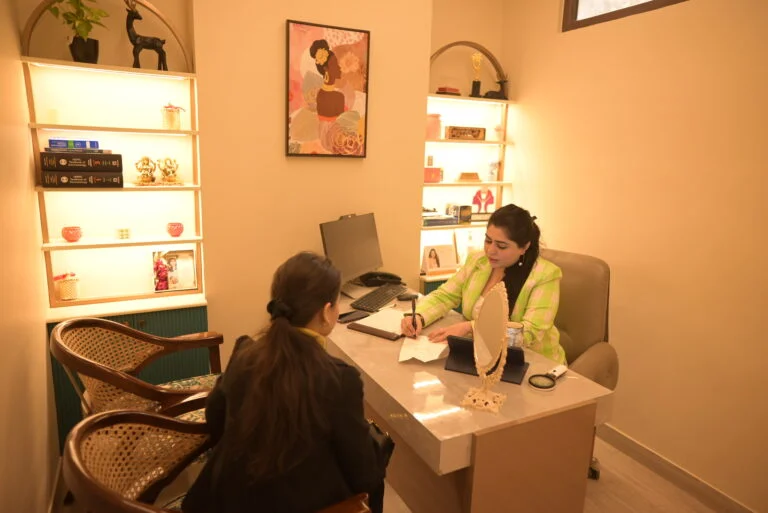
At House of Aesthetics, distinguishing between different types of skin pigmentation is one of the most important things we do in a consultation. The right treatment depends entirely on the right diagnosis.
This article explains the difference clearly — and what that means for your treatment plan.
What Is Skin Pigmentation?
Pigmentation is an umbrella term for any condition that causes uneven skin tone, dark spots, or patches. It is caused by an overproduction or uneven distribution of melanin — the pigment produced by cells called melanocytes in the deeper layers of your skin.
There are several distinct types of pigmentation, each with different causes, patterns and treatment responses:
- Post-inflammatory hyperpigmentation (PIH): Dark marks that appear after inflammation — acne, eczema, a cut, or even a peel gone wrong. PIH tends to be flat, localised and responds well to treatment.
- Sun spots (solar lentigines): Flat, clearly defined brown spots caused by cumulative UV exposure. Most common on the cheeks, forehead, hands and arms.
- Freckles (ephelides): Genetic in origin, intensified by sun exposure. Light brown and usually multiple.
- Drug-induced pigmentation: Certain medications cause melanin deposition, particularly in sun-exposed areas.
- Melasma: A distinct, complex form of pigmentation — explained in detail below.
What Is Melasma? And Why Is It Different?
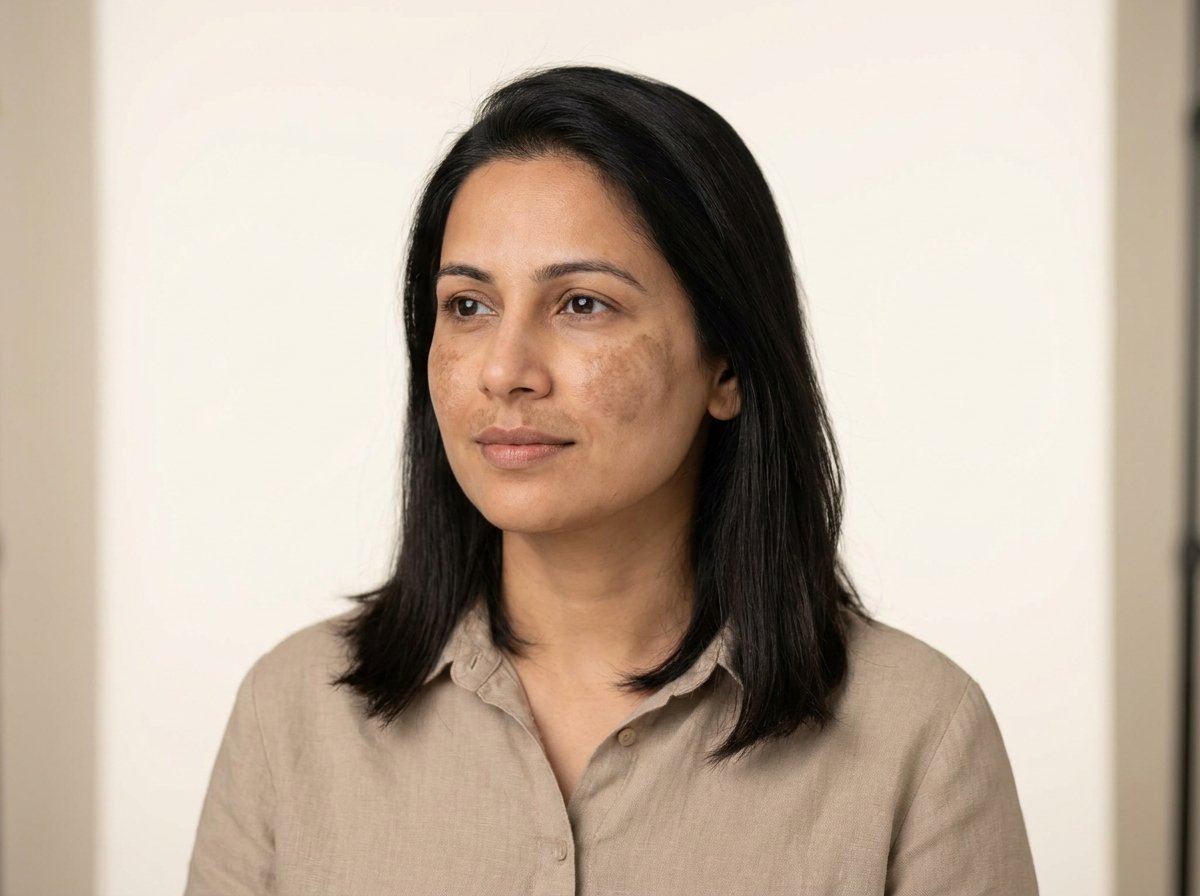
Melasma is a specific, hormonally-driven pigmentation disorder that presents as symmetrical brown or greyish-brown patches — most commonly on the cheeks, upper lip, forehead and chin. It is sometimes called the “mask of pregnancy” because of its association with pregnancy, though it affects many people outside of pregnancy as well.
What makes melasma different from other pigmentation:
It is hormonally triggered. Oestrogen stimulates melanocytes to produce excess melanin. This is why melasma flares during pregnancy, with oral contraceptive use, and around hormonal fluctuations.
Sun exposure amplifies it dramatically. Even brief unprotected sun exposure — a 15-minute walk in Delhi sunlight — can trigger a flare that takes weeks to fade. UV radiation accelerates the melanin production that hormones have already primed.
It is deeper in the skin. Melasma often has both an epidermal (surface) and a dermal (deep) component. Purely epidermal melasma responds better to treatment; dermal and mixed melasma is notoriously difficult to treat.
It has a high recurrence rate. Even after successful treatment, melasma returns without strict sun protection and maintenance. It is a chronic condition that requires management, not a one-time cure.
It is frequently misdiagnosed. When treated incorrectly — with aggressive peels or the wrong laser — melasma can worsen significantly. This is called paradoxical darkening, and it is distressingly common in patients who self-treat or visit inexperienced clinics.
How a Dermatologist Diagnoses the Difference
The clinical examination is the first step. Melasma has a characteristic bilateral, symmetrical pattern that distinguishes it from most other pigmentation. A Wood’s lamp examination (UV light) helps assess the depth of pigmentation — epidermal pigment glows more brightly, helping identify the type and depth.
In some cases, a dermoscopy examination is used for a more detailed look at the skin’s surface and pigment pattern.
Getting this diagnosis right is not optional — it is the entire foundation of your treatment plan.
Treatment for General Pigmentation (Non-Melasma)
Chemical Peels
For PIH, sun spots and surface-level pigmentation, chemical peels are extremely effective. The right peel type depends on your skin tone and the depth of pigmentation:
- Glycolic acid peels — effective for epidermal pigmentation and general skin brightening
- Lactic acid peels — gentler, suitable for sensitive skin
- Mandelic acid peels — ideal for Indian skin tones where PIH risk from stronger peels is high
- Modified Jessner’s peel — addresses multiple pigmentation types simultaneously
A course of 4–6 peels, spaced 2–3 weeks apart, combined with targeted home care, delivers reliable improvement for most types of pigmentation.
QSwitch Nd:YAG Laser and Laser Toning
For stubborn spots, sun damage and uneven tone that has not responded fully to peels, laser toning with a QSwitch laser is an excellent next step. The laser selectively targets melanin pigment, breaking it down without damaging the surrounding skin. It is safe for Indian skin tones when the correct parameters are used.
A course of 6–8 sessions is typically recommended, with gradual, progressive lightening visible over the course of treatment.
Topical Brightening Agents
Prescribed by your dermatologist, these often include combinations of hydroquinone, kojic acid, azelaic acid, niacinamide and vitamin C — used alongside in-clinic procedures to suppress melanin production between sessions.
Treatment for Melasma: A More Careful Approach
Melasma requires a different mindset: slower, gentler and always sun-safe.
Cosmelan Peel — The Gold Standard for Melasma
Cosmelan is the world’s leading professionally-applied depigmentation treatment specifically designed for melasma. Unlike standard chemical peels that simply exfoliate, Cosmelan works by inhibiting the enzyme (tyrosinase) that drives melanin production. It addresses pigmentation at the source.
The protocol involves an in-clinic application by your dermatologist, followed by a home maintenance programme. Results are progressive over 30–90 days, with patients typically seeing 70–90% improvement in melasma intensity.
Because Cosmelan works on the melanogenesis pathway rather than simply peeling the skin, it is far more effective for melasma than standard chemical peels — and has a much lower risk of worsening.
Dermamelan is a similar professional-grade depigmentation peel, also available at House of Aesthetics. Your dermatologist will advise on which is more appropriate for your specific case.
Laser Toning for Melasma — With Caution
Low-fluence QSwitch laser toning can be used for melasma — but it requires significant expertise. High settings or the wrong laser type can trigger a worsening of melasma. In experienced hands with appropriately low-fluence settings and correct intervals, laser toning can be a useful adjunct to topical therapy.
At our clinic, laser toning for melasma is always discussed in the context of a comprehensive management plan — not offered as a standalone quick fix.
Sun Protection: Non-Negotiable for Melasma
No treatment for melasma will deliver lasting results without rigorous daily sun protection. In Delhi’s sunny climate, this means:
- Broad-spectrum SPF 50+ applied every morning, even on cloudy days and when staying indoors near windows
- Reapplication every 2–3 hours when outdoors
- Physical sun protection (hat, umbrella) for extended outdoor time
Sun protection is not just supportive — for melasma, it is therapeutic. Without it, any improvement from clinical treatment will reverse within weeks.
Hormonal Considerations
For patients whose melasma is clearly linked to oral contraceptives, your dermatologist may discuss alternative contraceptive options with your gynaecologist. For pregnancy-associated melasma, most in-clinic treatments are deferred until after delivery and breastfeeding — though safe topical options are available. Hormonal melasma post-pregnancy often improves naturally with time and sun protection, though clinical treatment accelerates this.
Common Mistakes to Avoid
Using the wrong peel for melasma. Aggressive peeling of melasma — especially with stronger TCA peels — can trigger rebound hyperpigmentation that is worse than the original. Always see a dermatologist before any peel on melasma.
Skipping sun protection. The single most common reason melasma returns is inadequate sun protection. This step cannot be compensated for by any clinical treatment.
Expecting a one-session fix. Pigmentation treatment — especially melasma — requires a committed course of treatment. Patients who stop after one or two sessions are unlikely to see lasting benefit.
Treating at an unqualified skin care centre. Melasma is a medical condition. A salon facial or skin-lightening drip without proper diagnosis and oversight can worsen it significantly.
Ready to Identify and Treat Your Pigmentation?
The first step is an accurate diagnosis. Whether you are dealing with stubborn PIH, sun damage, or the more challenging pattern of melasma, the treatment approach is different — and getting it right from the start saves time, money and frustration.
Book a pigmentation consultation at House of Aesthetics — we are based in Greater Kailash, South Delhi, and serve patients from across the city including Hauz Khas, Defence Colony, Lajpat Nagar and South Extension.
This article has been reviewed and approved by the dermatologist at House of Aesthetics, Greater Kailash, Delhi. It is intended for informational purposes and does not replace a clinical consultation.