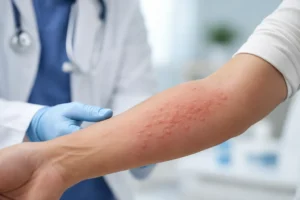
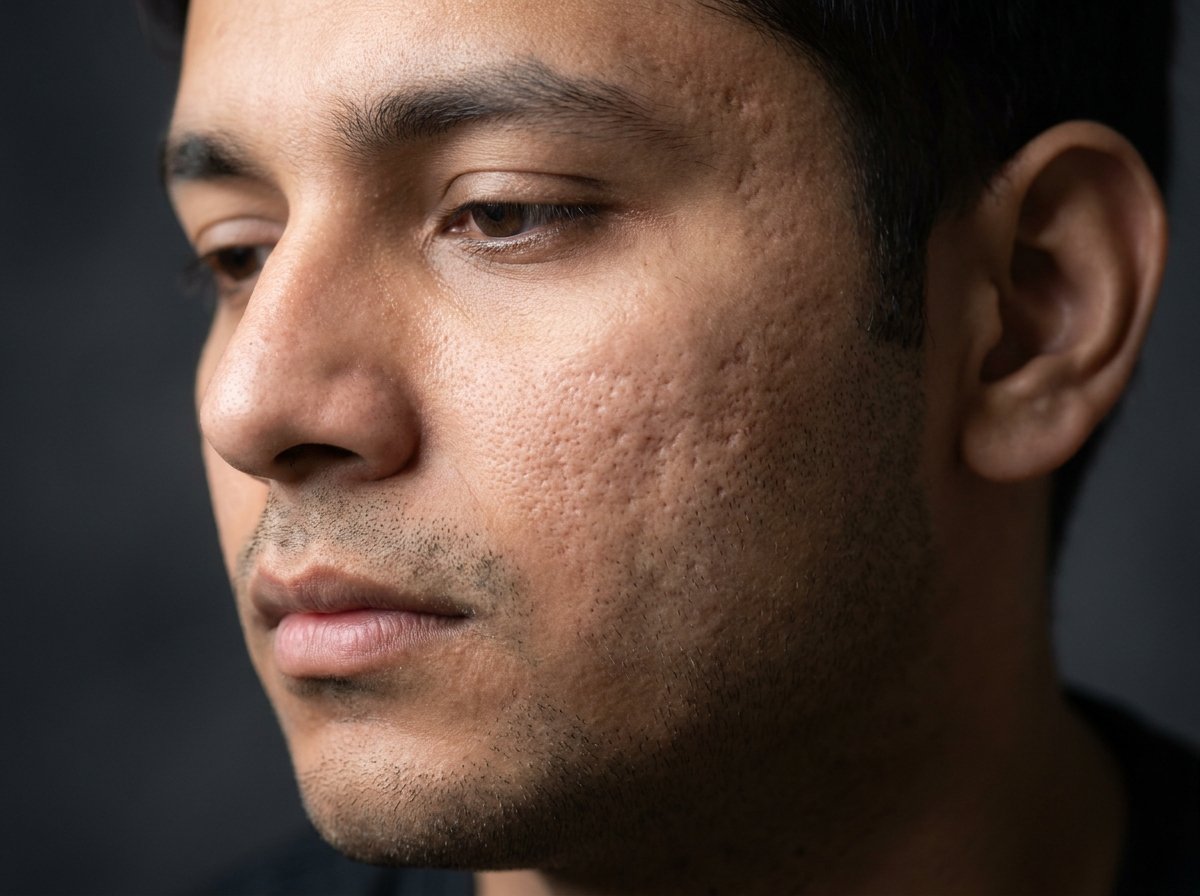
Acne scars are one of the most emotionally distressing skin conditions we treat at House of Aesthetics. Unlike a spot that fades in days, a scar can stay for years — sometimes decades — affecting confidence, social interactions and quality of life.
The good news is that acne scar treatment has advanced significantly. Techniques available today at specialist aesthetic clinics in Delhi can deliver visible, measurable improvement that was simply not possible a decade ago. But the key to getting the best results lies in understanding what kind of scars you have — because different scar types respond to fundamentally different treatments.
This guide gives you an honest, complete picture of acne scars: what they are, how they form, what works and what you should ask your dermatologist before starting treatment.
Why Do Acne Scars Form?
A scar forms when the skin’s healing response to acne is disrupted. When a pimple becomes inflamed — particularly a deep nodule or cyst — it damages the dermis, the deep structural layer of skin beneath the surface.
If the skin produces too little collagen during healing, a depressed (atrophic) scar forms. If it produces too much, a raised (hypertrophic or keloid) scar results. The type and severity of scarring depends on:
- The depth and severity of the original acne lesion
- How quickly the acne was treated
- Whether the spot was picked or squeezed (which dramatically worsens scarring)
- Your individual skin’s healing capacity and genetics
This is why treating active acne early and correctly is so important — prevention is always preferable to correction.
The Three Main Types of Atrophic Acne Scars
The vast majority of acne scars seen on the face are atrophic — meaning they represent a loss of tissue, creating a depressed appearance relative to the surrounding skin. There are three distinct subtypes, and the distinction matters enormously for treatment planning.
Ice Pick Scars
Ice pick scars are narrow, deep channels that extend straight down into the dermis or even deeper. They look like small pinpricks or enlarged pores with sharply defined edges. They are the most difficult scar type to treat because of their depth.
Best treatments: TCA Cross (a focused chemical peel applied inside the scar channel), punch excision (surgical removal for very deep scars), followed by resurfacing.
Boxcar Scars
Boxcar scars are wider depressions with sharp, defined vertical walls — like a crater. They vary from shallow to deep. They are most commonly found on the cheeks and temples.
Best treatments: Subcision, MNRF (Microneedling Radiofrequency), CO2 fractional laser, and dermal fillers for temporary volume correction. Deep boxcar scars may need a combination approach.
Rolling Scars
Rolling scars create an undulating, wave-like texture on the skin’s surface. They appear because fibrous bands tether the skin to deeper tissue, pulling the surface downward in an irregular pattern. When the skin is stretched taut, rolling scars often become less visible — which is a useful diagnostic test.
Best treatment: Subcision is the gold standard for rolling scars. By releasing the fibrous tethering bands, subcision allows the skin to lift back to a more even surface. This is frequently combined with MNRF or filler to sustain the improvement.
Raised Acne Scars: Hypertrophic and Keloid
A smaller subset of patients — particularly those with darker skin tones — develop raised scars rather than depressed ones.
Hypertrophic scars are raised, firm and reddish. They stay within the boundary of the original wound and may improve over time.
Keloid scars extend beyond the original wound boundary, grow progressively and do not resolve on their own. They require specific treatment including intralesional steroid injections, laser and sometimes surgical excision.
Attempting to treat raised scars with resurfacing lasers without first establishing the scar type can worsen them — which is why an expert diagnosis is non-negotiable.
Post-Inflammatory Hyperpigmentation (PIH) vs True Scars
Before discussing treatments, it is worth clarifying a common point of confusion. Many patients come in with what they believe are acne scars but are actually PIH — flat, dark or red marks left after a pimple heals. PIH is not a scar. It is a pigmentation change and it responds very well to targeted peels, laser toning and topical depigmenting agents. True scars involve structural changes to the dermis and require more intensive treatment.
A dermatologist can distinguish between the two in a clinical examination, which is one of the most important reasons to get a proper consultation before beginning any treatment.
Acne Scar Treatments Available at House of Aesthetics
MNRF — Microneedling Radiofrequency
MNRF is currently one of the most effective treatments for atrophic acne scars, and it is one of our most requested procedures. It uses ultra-fine needles that penetrate the skin to a precisely controlled depth, delivering radiofrequency energy directly into the dermis. This triggers a powerful collagen remodelling response — filling in depressed scars from below the surface.
MNRF is particularly effective for boxcar and rolling scars. Its key advantages include:
- Safe for Indian (Fitzpatrick III–V) skin tones — unlike ablative lasers, it carries minimal risk of PIH
- Minimal downtime (1–3 days of redness)
- Can treat active areas at the same time as improving texture and pore size
A typical course is 3–4 sessions spaced 4–6 weeks apart.
CO2 Fractional Laser
CO2 laser remains the gold standard for moderate-to-severe acne scars. The laser creates thousands of controlled micro-channels in the skin, vaporising scarred tissue and triggering intensive collagen production. The result is visible resurfacing — skin texture improves, scars are lifted, and overall skin quality is enhanced.
CO2 laser delivers more dramatic results than MNRF but requires more downtime (typically 5–7 days of redness and peeling). It is ideal for:
- Moderate-to-deep boxcar scars
- Combined acne scar and skin texture concerns
- Patients who want maximum improvement in fewer sessions
Given India’s skin tones and the risk of PIH with ablative lasers, our dermatologist carefully assesses each patient’s Fitzpatrick type before recommending CO2 laser and adjusts parameters accordingly.
Subcision
Subcision is a minor surgical procedure specifically designed for rolling scars and shallow boxcar scars with tethering. A fine needle is inserted beneath the scar and moved in a fan-like motion to break the fibrous bands pulling the skin down. As the bands release and a pocket of blood forms underneath, the skin lifts and a natural healing response fills the area with new collagen.
Subcision is one of the most underutilised yet highly effective treatments for rolling scars. It is frequently combined with MNRF or fillers to consolidate and extend the improvement.
Dermal Fillers for Scars
For rolling and boxcar scars, temporary filler (typically hyaluronic acid) can be injected beneath the scar to instantly lift the depression to the level of surrounding skin. This is not a permanent solution, but it provides immediate visible improvement and can be an excellent option for a patient who has an important event approaching or who wants to assess the potential improvement before committing to a laser course.
Chemical Peels for Scar Support
Superficial peels do not treat deep scars directly, but they play an important supporting role by improving skin texture, reducing PIH and prepping the skin before deeper treatments. TCA Cross, a very targeted application of trichloroacetic acid inside ice pick scars, is one of the few effective treatments for these difficult scars.
What Results Can You Realistically Expect?
This is the question patients most frequently ask — and the honest answer is that results vary based on scar depth, scar type, treatment chosen and the number of sessions completed.
For mild-to-moderate rolling and boxcar scars with MNRF, patients typically see 40–60% improvement after a full course of 3–4 sessions. With CO2 laser for deeper scarring, improvement in the 50–70% range is achievable.
Complete elimination of deep scars is rarely possible. The goal of treatment is significant visible improvement that restores confidence — not absolute perfection. Any clinic that promises to make your scars disappear entirely should be approached with scepticism.
The Treatment Sequence: Why Order Matters
Effective acne scar treatment follows a sequence. Treating in the wrong order wastes money and can harm results.
- Control active acne first. New breakouts will create new scars, undoing any scar treatment performed. This is non-negotiable.
- Treat PIH alongside early scar management. Peels and laser toning can address pigmentation while the skin is being prepared for deeper treatment.
- Subcision first for rolling scars. Releasing tethering is the foundation — then MNRF or laser builds collagen on top of a structurally improved base.
- Multiple modalities, multiple sessions. The best results come from combining treatments strategically over time, not from one high-powered session.
How Much Does Acne Scar Treatment Cost in Delhi?
Cost depends on the treatment type, the area being treated and the number of sessions required. As a reference point:
- MNRF (per session, full face): Generally in the range of ₹8,000–₹20,000 at quality clinics
- CO2 Fractional Laser (per session, full face): ₹12,000–₹30,000 range
- Subcision: Priced per scar or per area
At House of Aesthetics, we provide a detailed treatment plan with associated costs after your consultation — because the right plan for your specific scars will always give better value than a one-size-fits-all package.
Start Your Acne Scar Treatment Journey
Acne scars are treatable. With the right diagnosis, the right combination of treatments and the right expectations, significant improvement is achievable for almost every patient we see.
Book a consultation at House of Aesthetics — we are located in Greater Kailash, South Delhi. Our dermatologist will assess your scar types, recommend the most appropriate treatment sequence and give you an honest picture of what results to expect.
This article has been reviewed and approved by the dermatologist at House of Aesthetics, Greater Kailash, Delhi. It is intended for informational purposes and does not replace a clinical consultation.